Category: Wars & Military
Explore the world’s most defining conflicts through rare military photographs. See soldiers, equipment, and strategy that marked global history.
These photos honor bravery, loss, and the lessons of war that changed humanity forever.
-
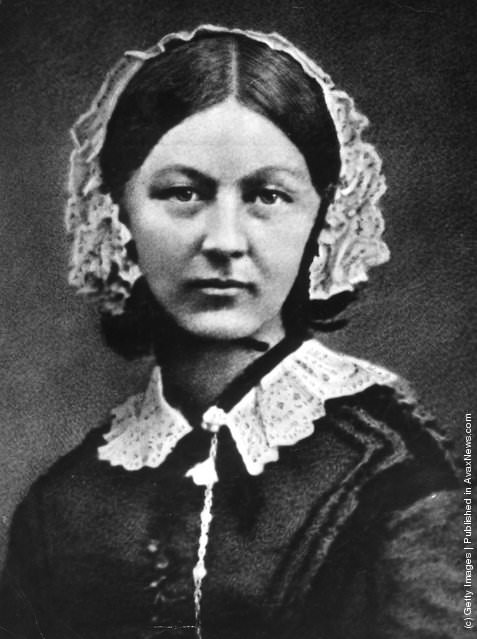
#15 Florence Nightingale, the first woman to receive the Order of Merit for her Crimean War efforts, 1850s.
Florence Nightingale meets the viewer head-on in a spare studio portrait, her expression steady and unsentimental. The neat center part of her hair, the lace cap framing her face, and the crisp white collar against a dark dress speak to mid-19th-century formality as much as personal discipline. With no distracting backdrop, attention falls on the…
-
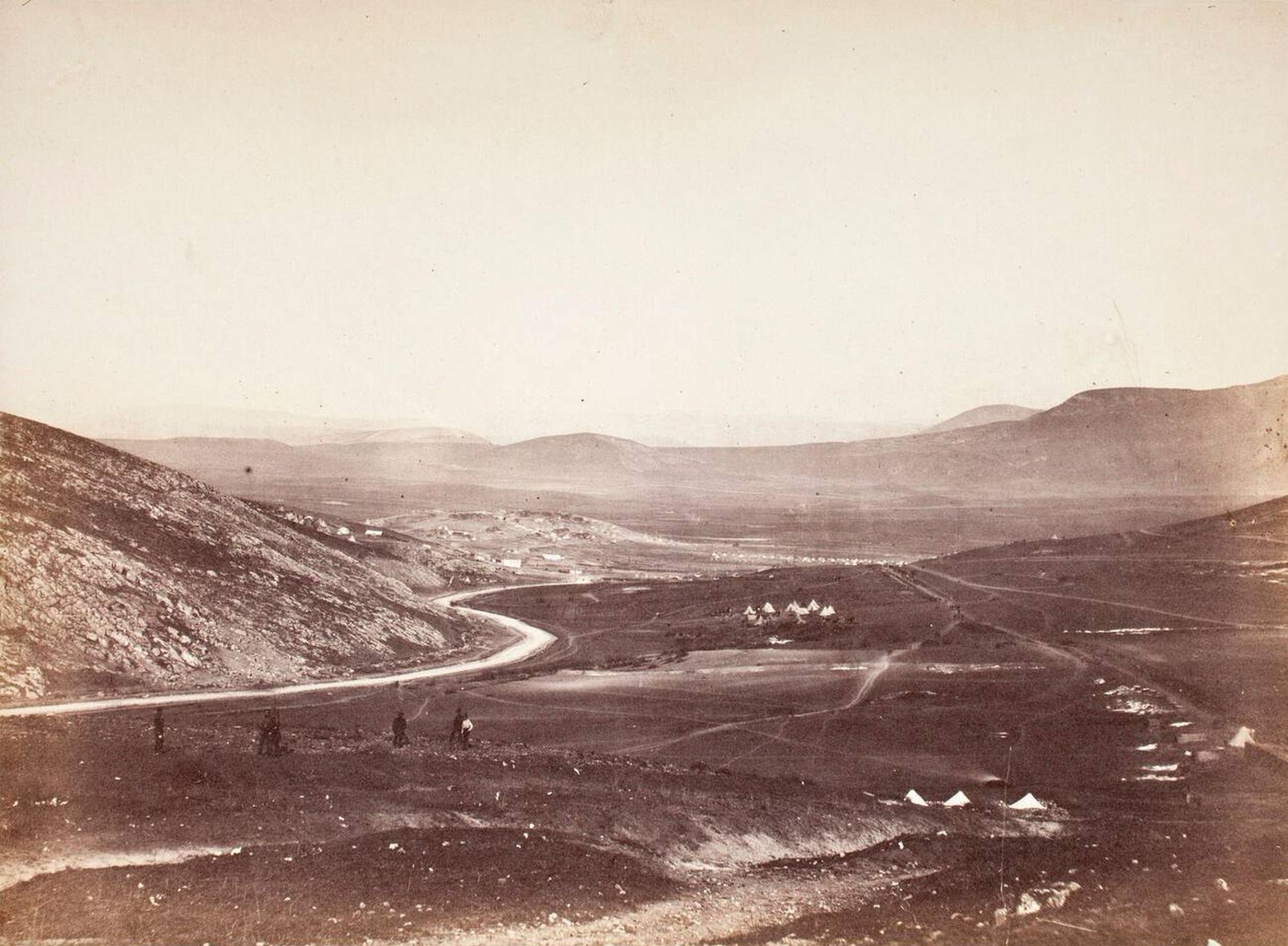
#31 Kadikoi, from the Camp of Horse Artillery, 1856.
Across a wide, treeless valley, the land rolls out in pale bands of earth and shadow, with low hills rising in the distance and a winding road cutting a deliberate curve through the scene. Small clusters of tents sit lightly on the plain, their bright shapes emphasizing how exposed a military camp could be in…
-
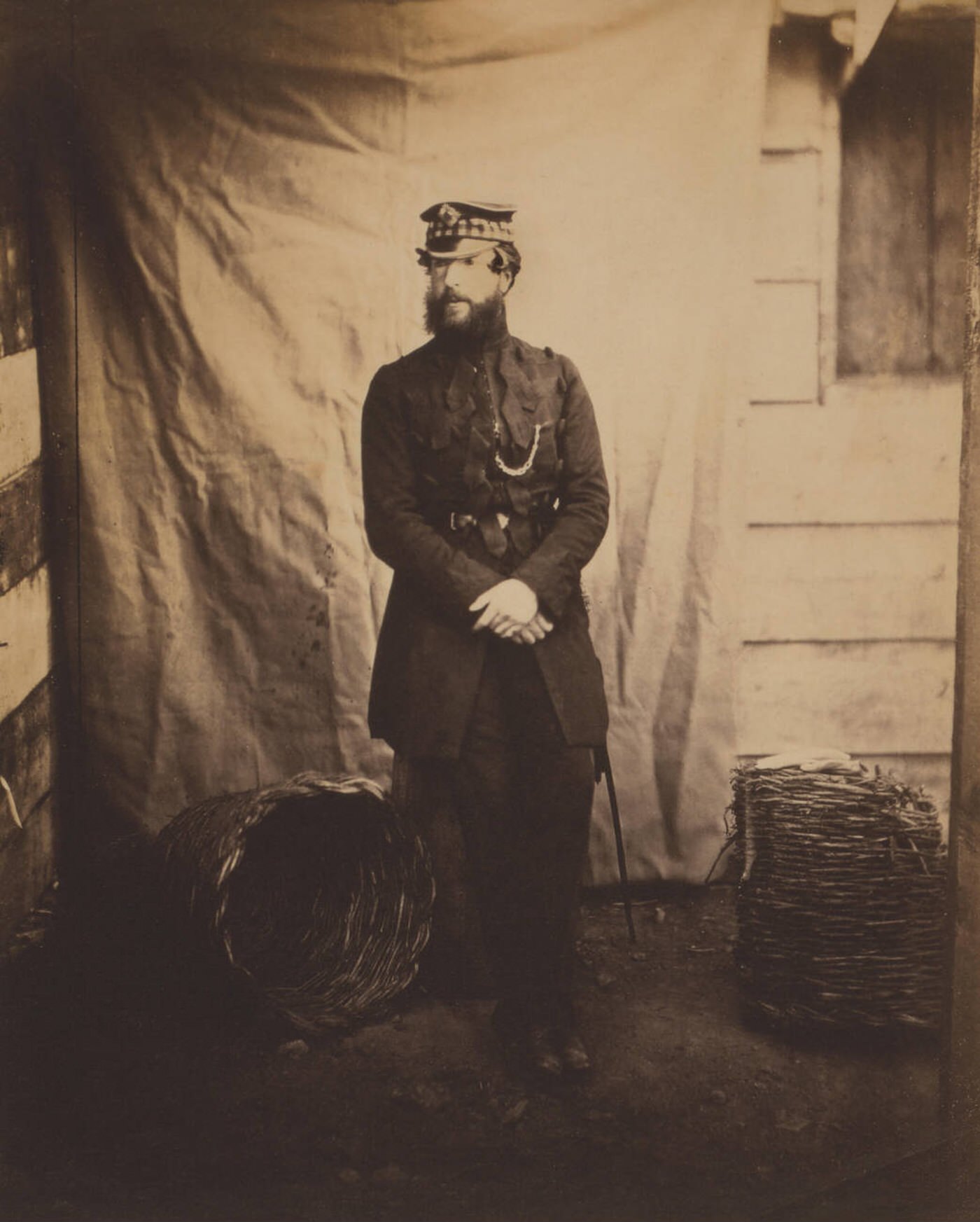
#47 British Captain Charles Holder during the Crimean War, 1855.
Bearded and composed, British Captain Charles Holder stands for the camera in 1855, his dark military coat neatly fastened and a patterned cap set firmly above a steady gaze turned slightly to the side. A chain drapes across his chest, and his hands rest together in front, giving the portrait a formal calm that contrasts…
-
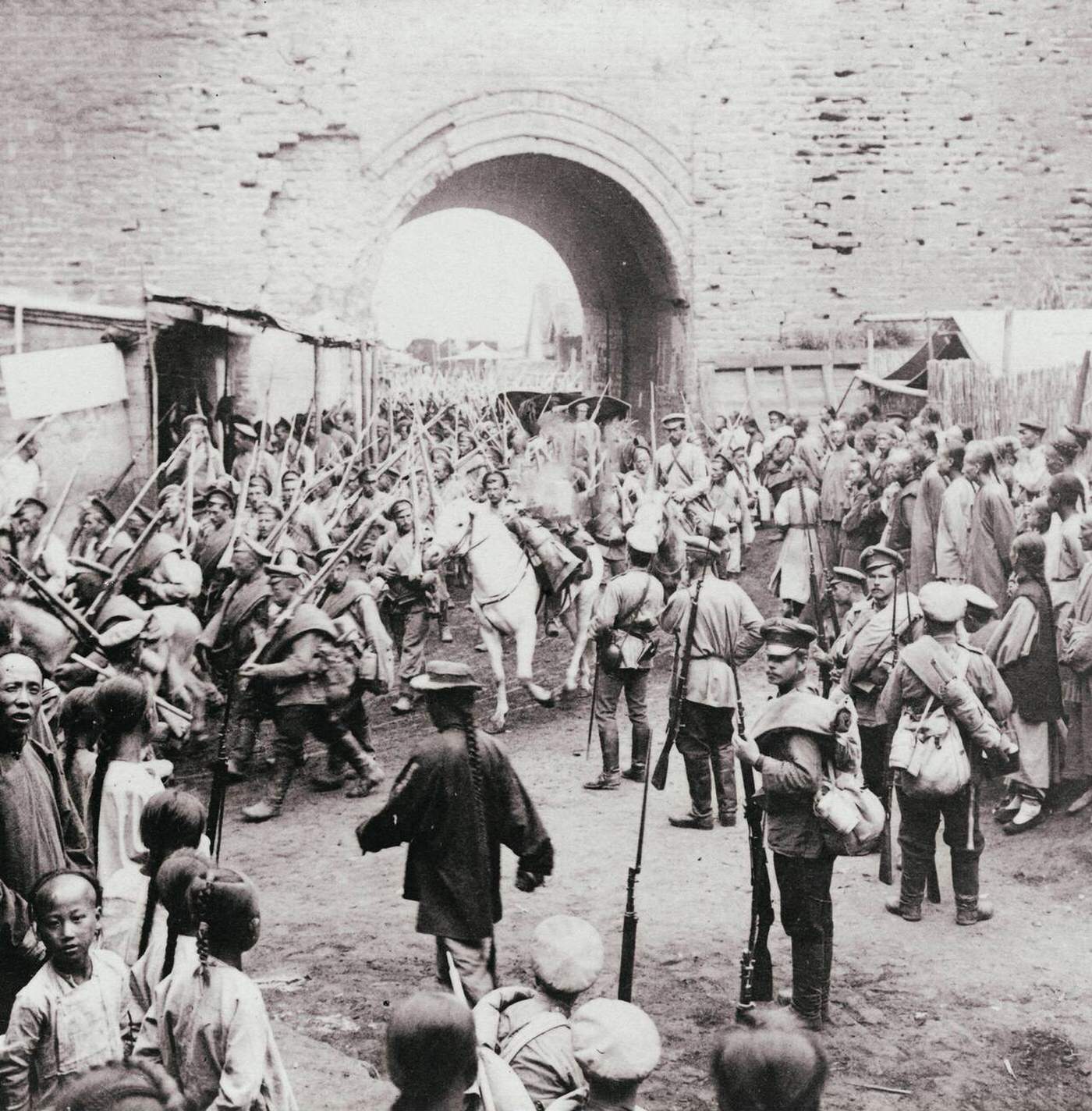
#7 Soldiers of the Russian empire passing through the gates of Mukden, Manchuria, 1905.
Through the arched gates of Mukden in Manchuria, a column of soldiers from the Russian Empire presses forward, their long rifles raised into a dense thicket of bayonets and barrel lines. The stonework of the passage frames the scene like a stage, while the road beneath is churned into mud by boots, hooves, and the…
-
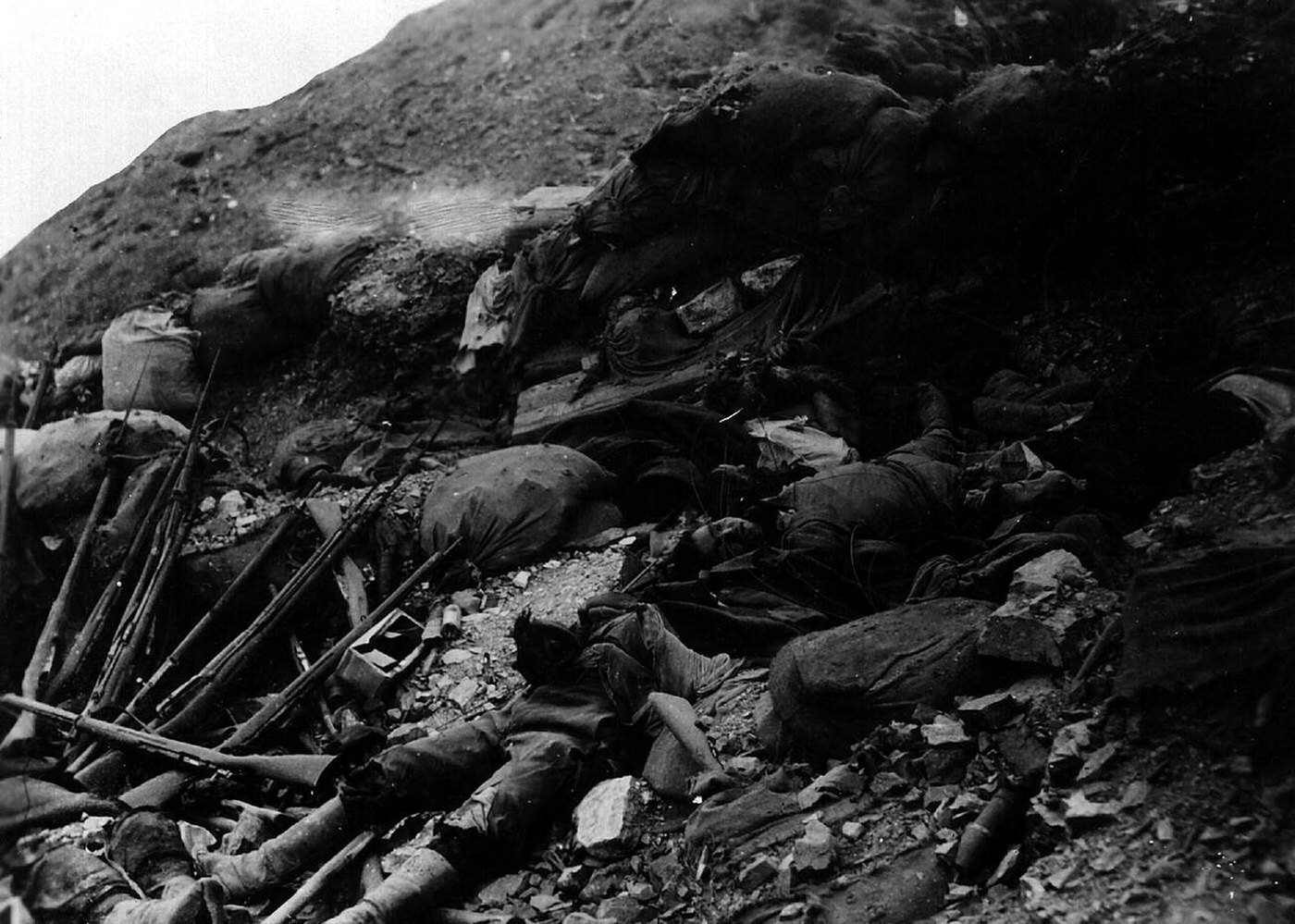
#23 Russo-Japanese War, 1900s.
Across a rough hillside, bodies lie among scattered rifles and broken ground, a stark battlefield aftermath associated with the Russo-Japanese War in the 1900s. The terrain looks hastily churned, with debris and uneven earth suggesting intense fighting and the suddenness with which positions could be overrun. Nothing in the frame offers ceremony or distance; it…
-
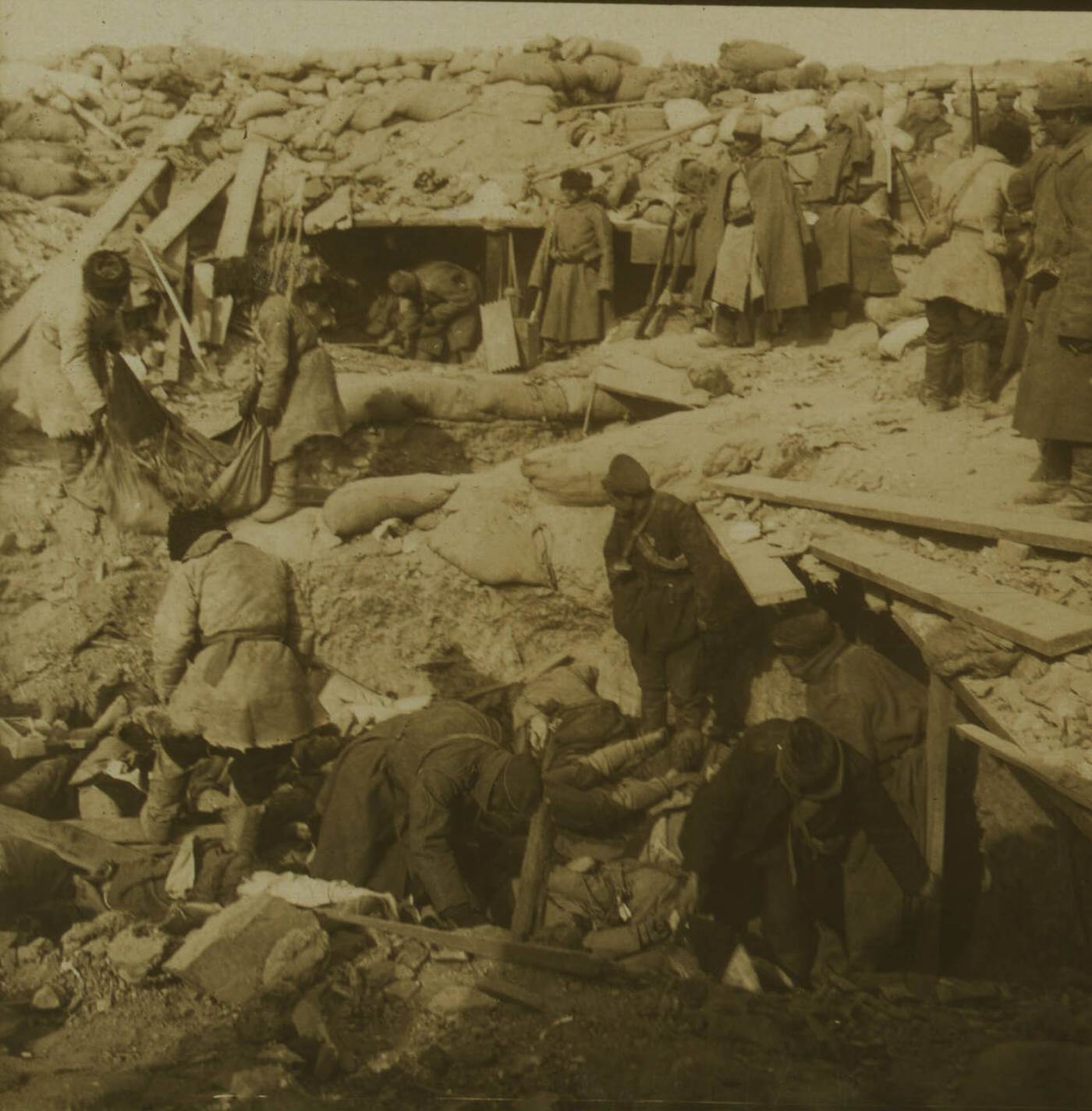
#39 Japanese buried by Russians inside fort, where every man entering was killed by bayonet in Port Arthur.
Beneath a low roof of sandbags and splintered timbers, a crowded fortification turns into a worksite of grim necessity. Men in heavy coats gather along the trench line, some standing guard with rifles while others bend to the hard labor at their feet, framed by the rough geometry of dugouts and collapsed earth. The scene…
-
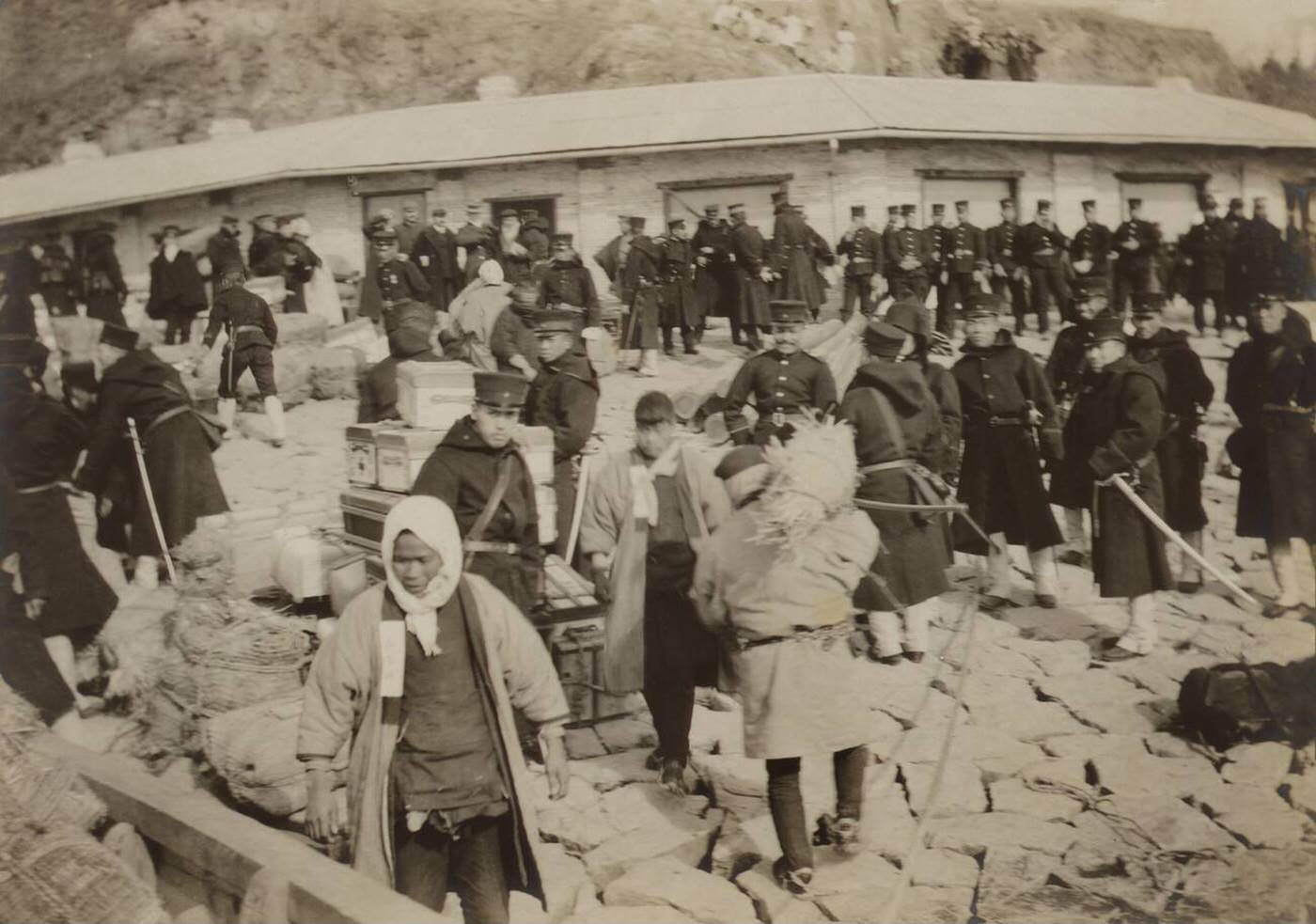
#55 Japanese Cavalry Troops watching over their Supplies on the beach at Chemulpo, 1904.
Along the rough stones of the Chemulpo waterfront, uniformed Japanese cavalrymen stand guard as supplies are landed and sorted in the open air. Crates, bundles, and coiled rope crowd the foreground, while a long, low building behind the scene frames a dense line of soldiers watching the work. The composition emphasizes control and vigilance, with…
-
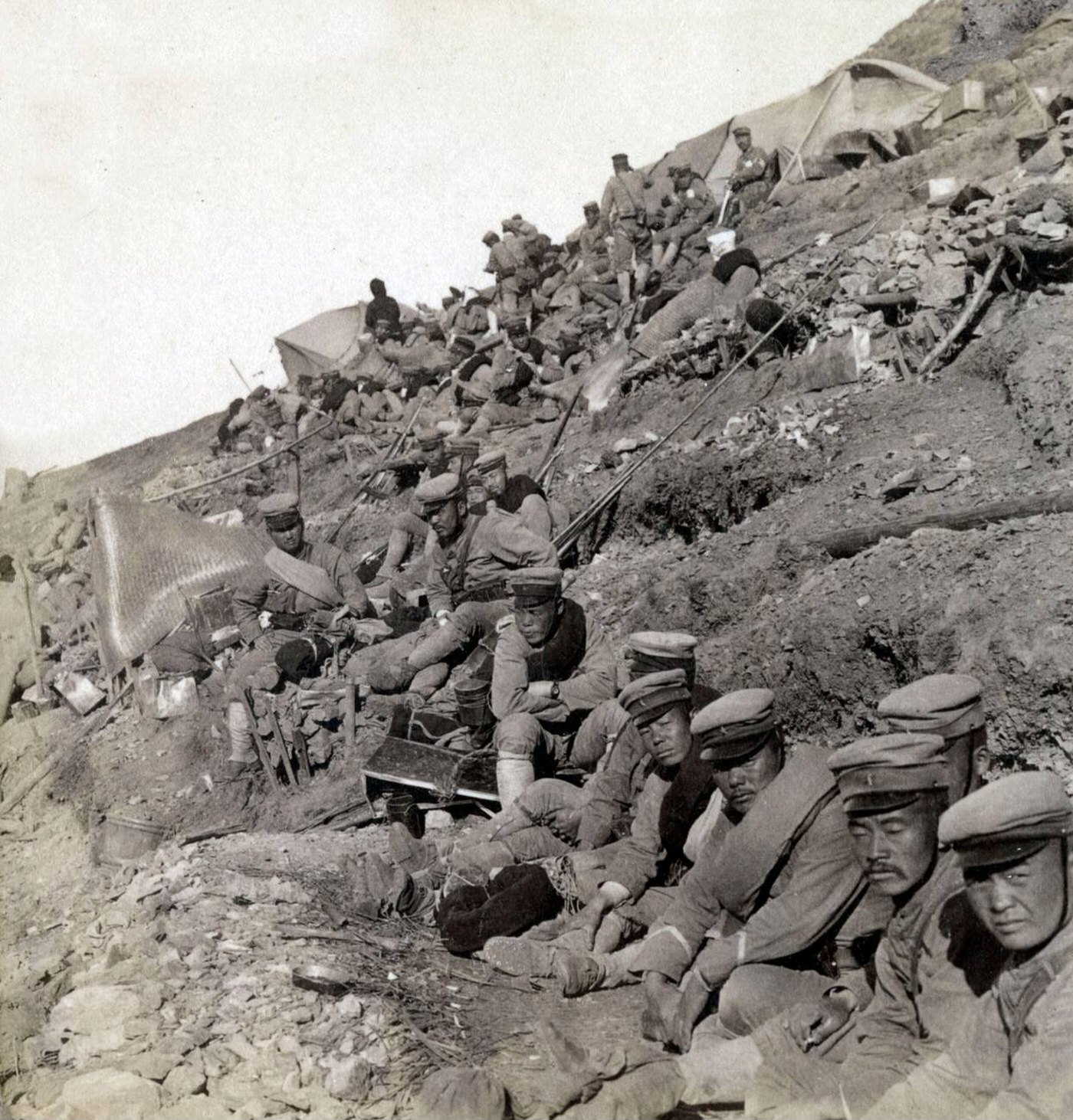
#71 First Division Japanese soldiers near Port Arthur, China, preparing to move into the fighting lines during the Siege of Port Arthur, 1900s.
Along a raw, sloping earthwork near Port Arthur, soldiers of Japan’s First Division pause in a cramped trench line, their uniforms dusty and their caps pulled low against glare and grit. Rifles lean at angles where the ground allows, packs and kit are wedged into corners, and canvas tents cling to the hillside above, hinting…
-

#16 Roger Fenton’s mobile darkroom during the Crimean War; his assistant, Marcus Sparling, is seated. 1850s.
Parked on rough ground, a boxy wagon marked “PHOTOGRAPHIC VAN” turns the idea of battlefield reporting into something stubbornly practical. The heavy wooden body sits on large spoked wheels, with a small window cut into the side and a simple railing along the roofline. In an era when cameras were anything but portable, this rolling…
-
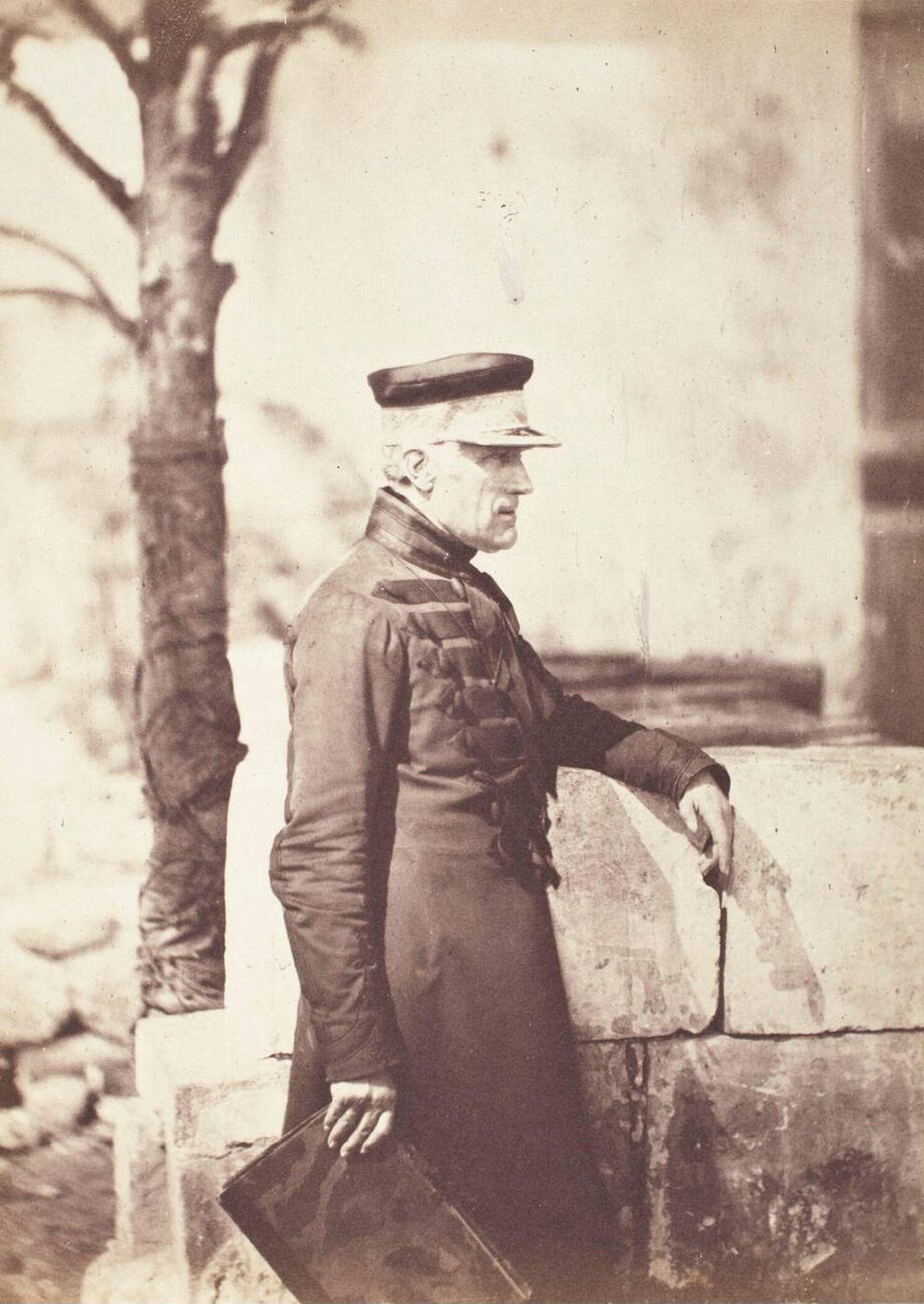
#32 Lieutenant General Sir Harry Jones, 1856.
Leaned against a heavy stone parapet, Lieutenant General Sir Harry Jones is presented in profile, his gaze set outward with the reserved composure expected of a senior Victorian officer. The uniform’s dark, structured cut and the flat-topped cap anchor the portrait firmly in mid-19th-century military style, while a folio or dispatch case hangs from his…