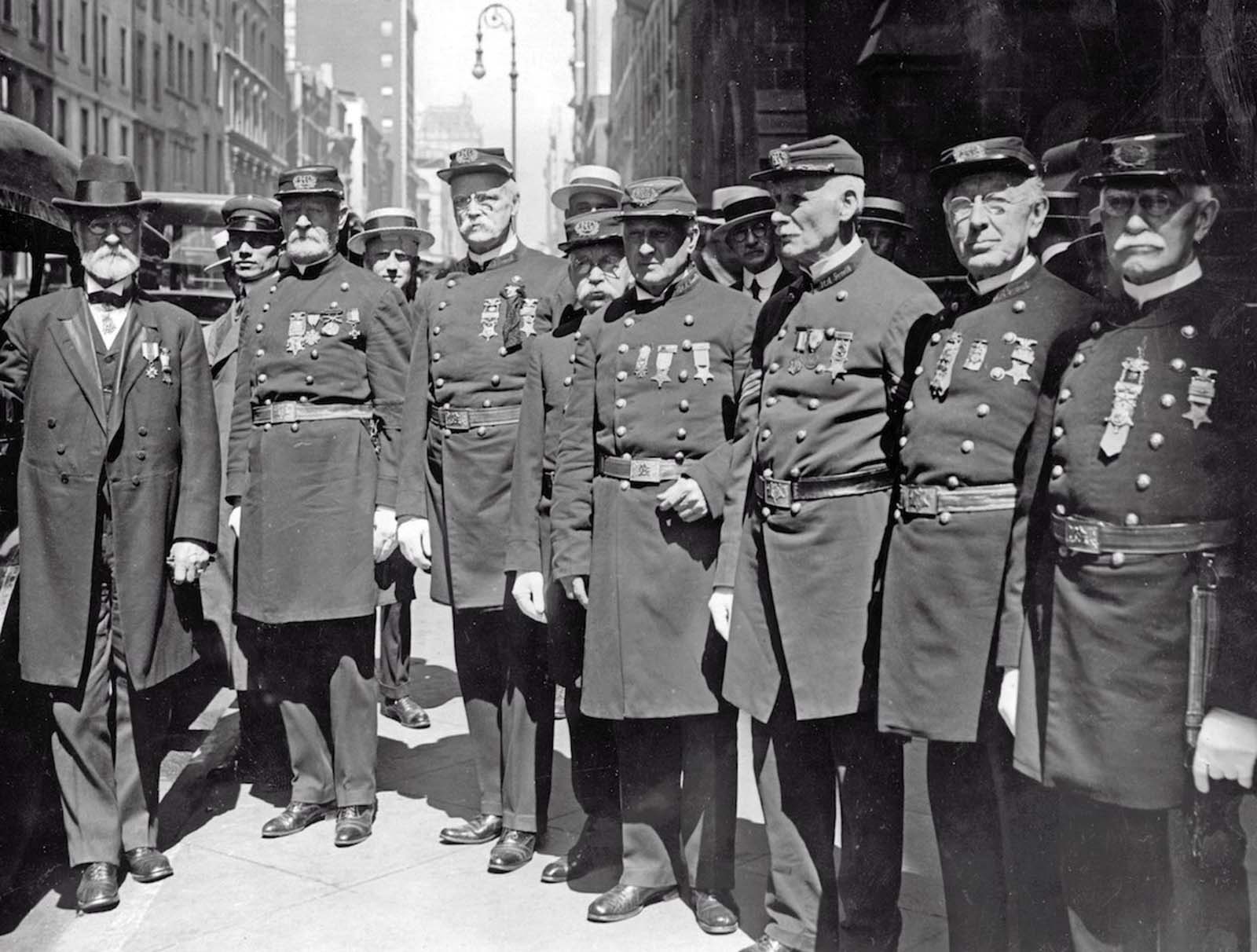
Uniformed Civil War veterans stand shoulder to shoulder on a city sidewalk, their faces weathered and their posture formal as they gather for the funeral of General Horace C. Porter in 1921. Heavy double-breasted coats, peaked caps, and neatly buckled belts create a disciplined line, while medals and ribbons catch the light as quiet testimony to earlier service. Behind them, hat-brimmed onlookers and a canyon of tall buildings frame the scene, placing this moment squarely in the bustle of early 20th-century urban America.
What draws the eye is the contrast between ceremony and age: white mustaches, lined cheeks, and steady gazes paired with the proud regalia of a bygone conflict. The men in front seem to represent a veterans’ organization, presenting themselves not as individuals but as a living remnant of the Civil War generation. Even without hearing the procession or the muffled street sounds, the photograph conveys the solemn rhythm of public mourning and military tradition.
As a historical record, this image speaks to how the United States remembered the Civil War decades later—through reunions, uniforms kept in readiness, and funerals that became civic events. The title anchors the occasion to General Horace C. Porter and the year 1921, when survivors of the 1860s were passing into memory and their stories were increasingly preserved in photographs like this one. For readers searching Civil War veterans, Grand Army-style uniforms, or early twentieth-century funeral procession history, the scene offers a powerful glimpse of remembrance made visible.