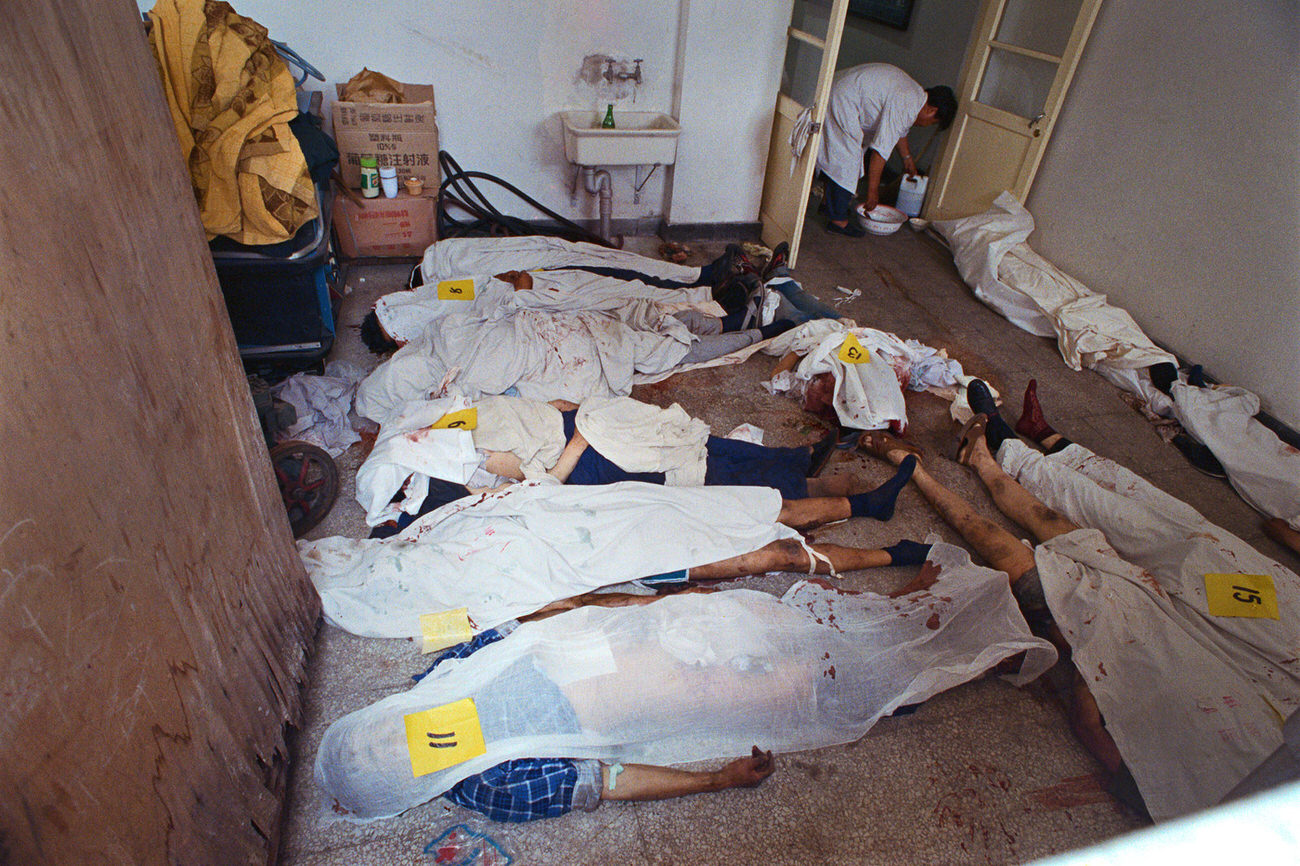
A cramped interior has been turned into a makeshift morgue, where demonstrators killed on June 4, 1989 lie in rows beneath thin sheets. Numbered tags rest on bodies and on the floor nearby, a stark attempt to impose order on overwhelming loss. Bloodstains, scattered clothing, and the hard, bare surfaces of the room underscore how quickly an everyday space can be repurposed in the aftermath of political violence.
Along the wall, cartons and bundled materials sit beside a small sink, while a lone worker bends near an open doorway, absorbed in the grim tasks of cleaning and handling what remains. The scene is quiet but not peaceful; it conveys urgency without movement, as if time has slowed under the weight of documentation and grief. Details like exposed legs, socks, and personal garments make the dead painfully human, reminding viewers that mass events are built from individual lives.
For readers searching the history of June 4, 1989 and the violent suppression of protest, this photograph stands as a brutally direct record of consequence rather than conflict in motion. It belongs within the broader story of civil unrest and state force, where control is asserted not only in streets and squares but also in improvised rooms like this one. Seen today, the image asks for remembrance, careful attention to evidence, and an honest reckoning with what happens when public dissent is met with lethal power.