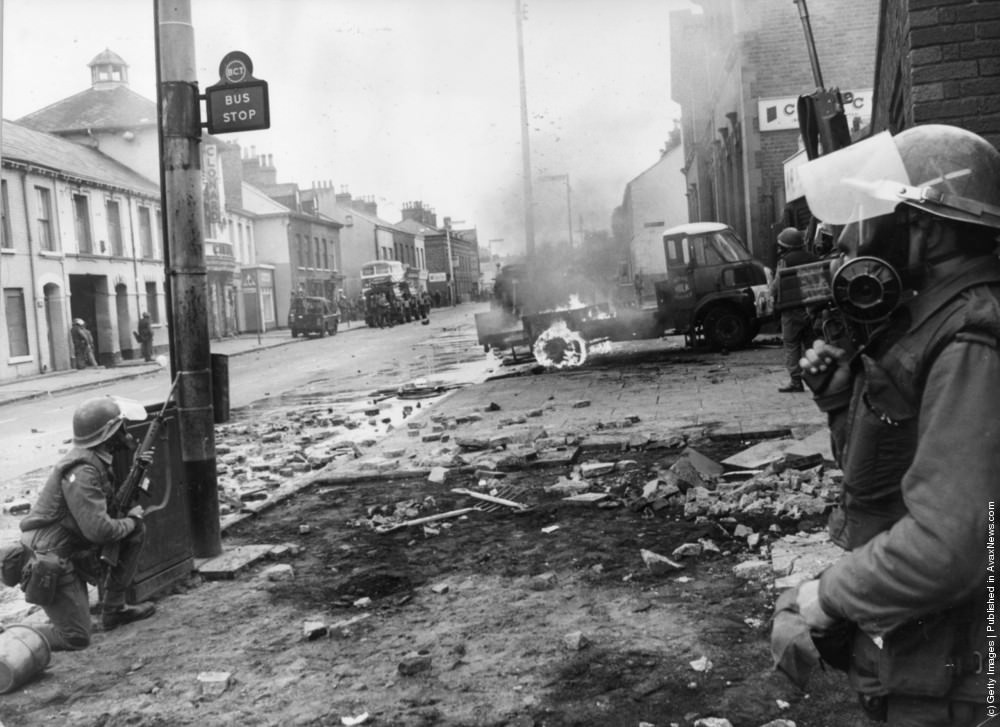
Smoke hangs low over the Falls Road as armed British troops crouch behind a pole and along a brick wall, turning an everyday streetscape—bus stop sign, terraced buildings, and shopfronts—into a battlefield. Rubble and broken masonry spill across the pavement, while a burning barricade and damaged vehicles choke the roadway, narrowing the view into the distance. The composition pulls the eye from the tense foreground to the hazy mid-street, where more soldiers and military vehicles appear amid drifting debris.
Taken during the British Army’s imposed curfew on 4th July 1970, the photograph speaks to how quickly security operations can reshape civilian space into a fortified zone. The title’s toll—five Catholics killed, around sixty injured, and many homes devastated—casts a heavy shadow over every detail, from the scattered bricks to the guarded stance of the troops. Instead of grand panoramas, the scene documents conflict at street level, where daily life and emergency rule collide.
For readers researching the Falls Road Curfew and the wider history of the Troubles, this image offers stark evidence of the militarisation of a residential district and the physical damage left behind. Its power lies in the ordinary markers still visible—public transport signage, familiar streets, and close-set houses—now framed by smoke, barricades, and defensive positions. As a historical photo, it invites reflection on contested memory, civilian vulnerability, and the enduring impact of urban conflict in Northern Ireland.