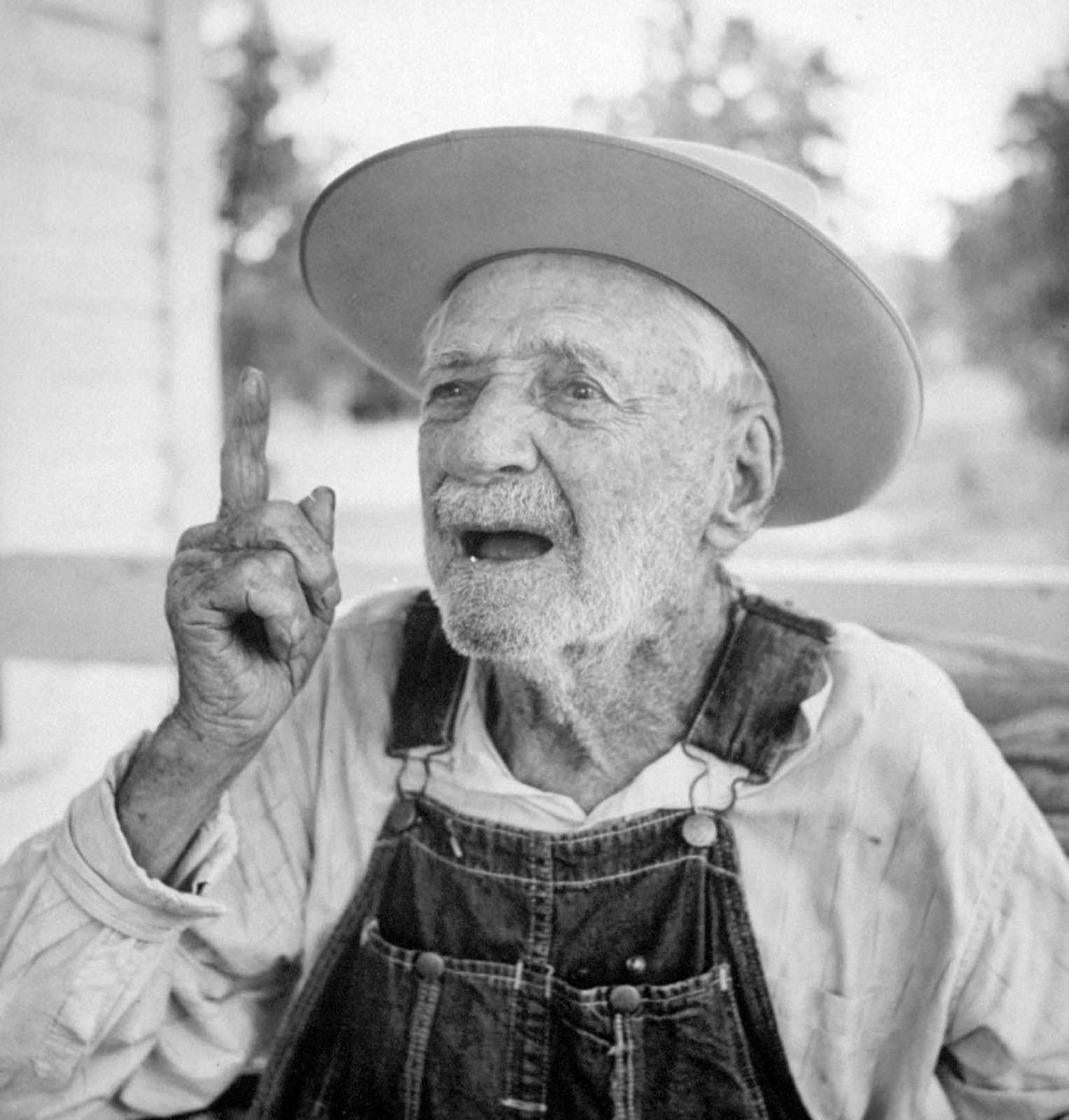
Leaning forward beneath a broad-brimmed hat, an elderly man lifts one finger as if punctuating a story that has been told a hundred times—and is still being told again. Work-worn overalls, a loose shirt, and the close framing of a porch-side setting give the scene a plainspoken, rural feel, while his open mouth and intent gaze suggest he’s mid-sentence rather than posing. The title’s note that he was a self-proclaimed “Confederate Civil War veteran” invites readers to look beyond the surface and consider how memory and identity were performed for the camera in 1956.
By the mid-20th century, the American Civil War had long since passed from living experience into legend, commemoration, and local storytelling, especially in communities where veterans’ groups, reunions, and inherited narratives still shaped public memory. Claims of wartime service could carry social weight—signaling endurance, patriotism, and belonging—even as the passage of time made verification difficult and blurred the line between personal history and community myth. In that sense, the photograph sits at the crossroads of oral tradition and historical record, capturing not a battlefield but the afterlife of the war in everyday conversation.
What lingers is the human detail: the animated gesture, the creased face, the practical clothing, and the porch as a stage for reminiscence. For readers searching Civil War veterans, Confederate memory, or 1950s Americana, this image offers a revealing glimpse into how the past was narrated in the living present. It’s a reminder that history isn’t only preserved in archives and monuments; it also survives in voices, claims, and the moments when someone insists—hand raised—that their story matters.