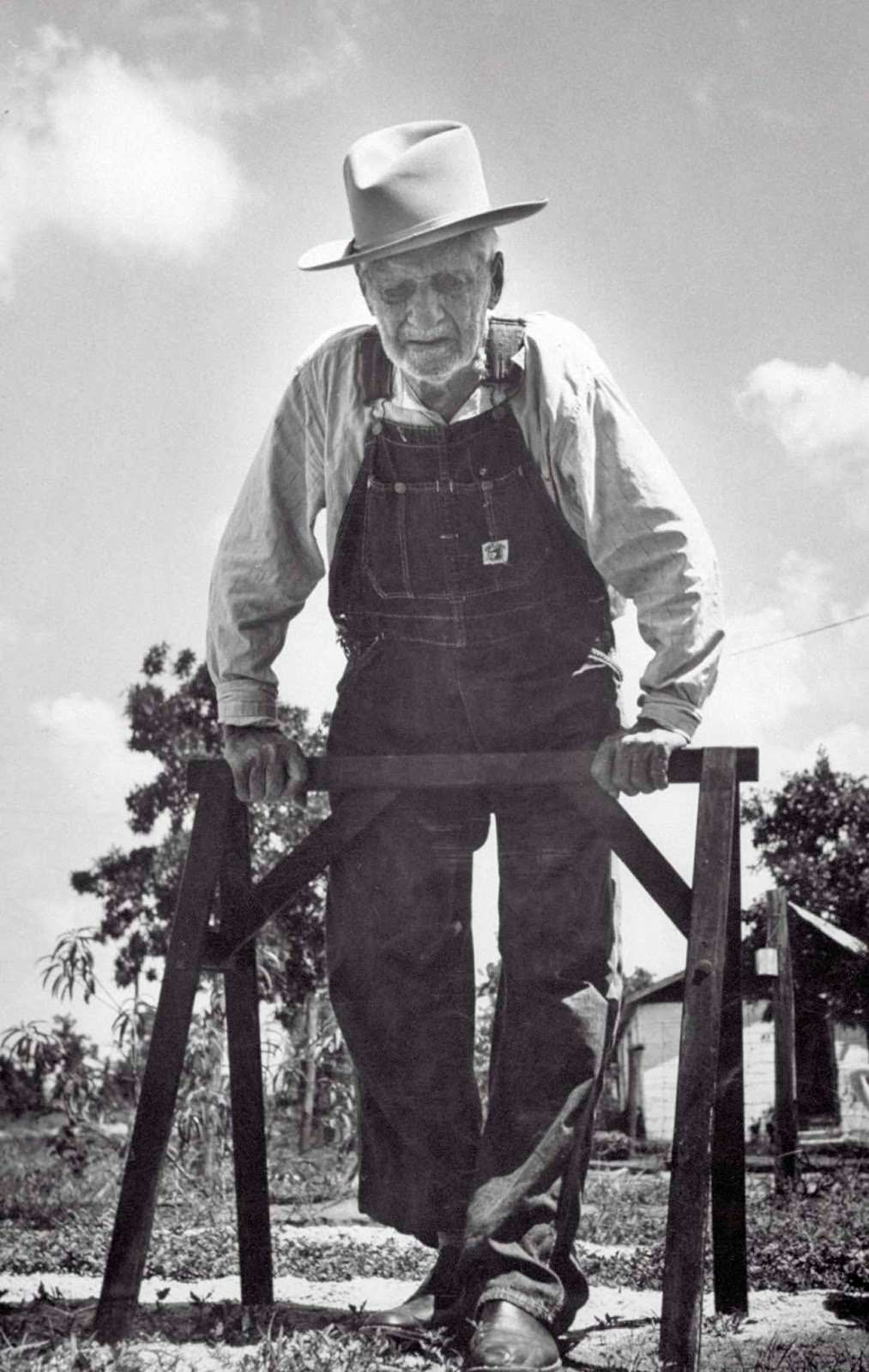
Leaning forward with both hands braced on a simple wooden gate, an elderly man in a broad-brimmed hat and well-worn overalls pauses mid-step in a sunlit yard. The photographer frames him from below so that his weathered face rises against a wide, bright sky, turning an ordinary moment of walking outdoors into something quietly monumental. Behind him, trees and a modest outbuilding hint at rural life and the daily routines that continued long after the great national upheavals had passed.
The title’s phrase “self-proclaimed Confederate Civil War veteran” immediately places the image in the complicated world of memory, identity, and storytelling in 1956. By then, the Civil War was nearly a century in the past, and claims of direct service were increasingly rare and often contested, yet such declarations could still carry weight in local communities and family lore. What lingers here is not a battlefield scene but the way the mid-20th century still reached back toward the 1860s—through recollection, reputation, and the enduring cultural pull of the “Civil Wars” narrative.
A closer look rewards the viewer with small details: the tension in his grip, the sturdy work shoes, the crease of denim, and the careful balance suggested by the gate under his hands. The setting feels unadorned and familiar, emphasizing how history often survives in unposed, everyday spaces rather than formal monuments. For readers searching for a 1956 photograph tied to Civil War memory, Confederate veteran claims, and American rural life, this post offers a stark reminder of how the past can be carried—sometimes accurately, sometimes ambiguously—into the most ordinary walk through a yard.