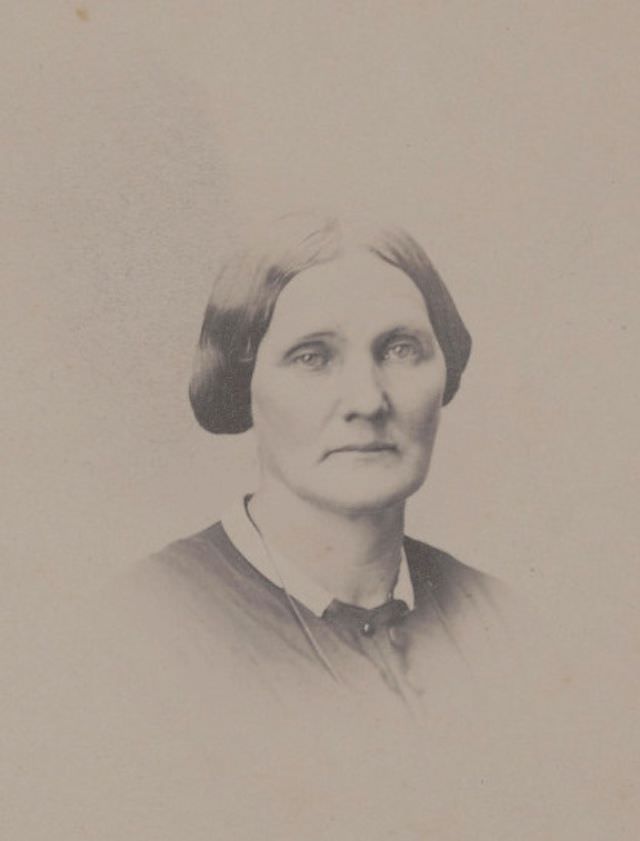
A calm, steady gaze meets the viewer in this softly faded portrait of Mary Ann Bickerdyke, the woman Union soldiers remembered as “Mother to the Boys in Blue.” The plain background and gentle light draw attention to her face—unadorned, resolute, and quietly authoritative—suggesting a person shaped by hard decisions rather than ceremony. Even without battlefield scenery, the photograph carries the intimacy of a wartime keepsake, the sort of likeness families and comrades held onto when news traveled slowly and loss came quickly.
Mary Ann Bickerdyke’s reputation was forged not in speeches but in service, tending wounded soldiers across numerous engagements of the American Civil War, including Shiloh, Vicksburg, Chattanooga, and Atlanta. Her work belonged to the harsh realities behind the lines: makeshift hospitals, shortages, exhaustion, and the constant urgency of care. In a conflict remembered for generals and grand strategy, her story highlights the vital, often uncredited labor that kept men alive long enough to recover—or at least to be comforted.
For readers interested in Civil War history, women in wartime, and the origins of organized nursing and relief work in America, this image offers a direct connection to that world. The simplicity of the portrait contrasts with the enormity of what the title recounts—nineteen battlefields and countless patients—inviting us to consider how compassion operated alongside violence. As you explore this post, let her likeness serve as a reminder that the war’s legacy was shaped not only by those who fought, but also by those who refused to look away from suffering.