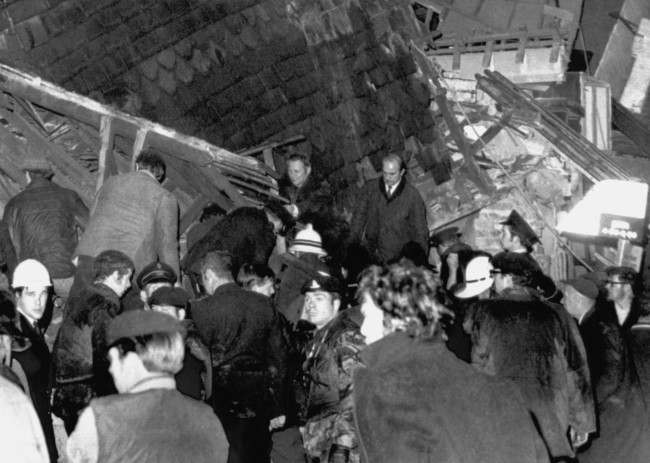
Beneath a buckled roofline and a jagged spill of timber and masonry, rescuers and onlookers press into the ruins of the Red Lion Bar in Belfast, Northern Ireland. The photograph is crowded with figures in dark coats and hard hats, their faces turned toward gaps in the wreckage where someone might still be reached. Harsh lighting catches splintered beams and broken wall sections, turning the shattered interior into a stark stage for urgent, methodical work.
Taken in the wake of the November 2, 1971 terrorist bomb attack, the scene speaks to the grim routines of emergency response during the Troubles. No single individual dominates the frame; instead, the story is communal—teams coordinating, hands searching, bodies leaning in to lift and clear debris. The title’s toll—two killed and over thirty injured—hangs over every gesture, transforming a familiar public house into a site of sudden loss.
For readers researching Belfast history, Northern Ireland conflict photography, or the lived experience of civil unrest, this image offers a raw, ground-level view of aftermath rather than ideology. It also preserves the texture of the moment: heavy clothing, crowded streets, and the tense proximity between rescuers and ordinary citizens drawn into the tragedy. As a historical document, it underscores how violence reshaped everyday spaces, and how quickly communities were forced to become witnesses, helpers, and survivors.