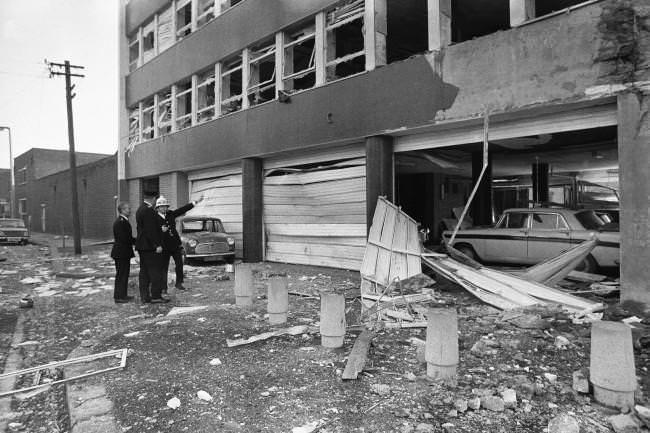
Rubble and splintered masonry spill across the pavement outside the Youth Employment Office in Belfast, Northern Ireland, after a bomb attack on Nov. 2, 1971. Security men stand near the blasted frontage, one gesturing toward the upper floors where rows of windows have been shattered and torn from their frames. The open ground level reveals a gaping bay, with broken panels and twisted debris hanging where walls and doors once held.
A parked car sits exposed behind the damaged opening, underscoring how close everyday routines stood to sudden violence. The building’s concrete supports remain upright, but the façade is peeled back, showing the violence of the blast in jagged lines and scattered fragments. Even the street scene feels interrupted—bits of wreckage and dust turn an ordinary urban corner into a forensic landscape.
Framed as a moment of inspection rather than rescue, the photograph leans into the aftermath: men assessing structural harm, pointing out impact zones, and taking stock of what remains. Placed within the broader context of civil conflict, it highlights how attacks targeted not just people, but institutions tied to work, opportunity, and public life. For readers searching the history of Belfast during the Troubles, this image offers a stark, ground-level record of damage, vulnerability, and the uneasy return to order after an explosion.