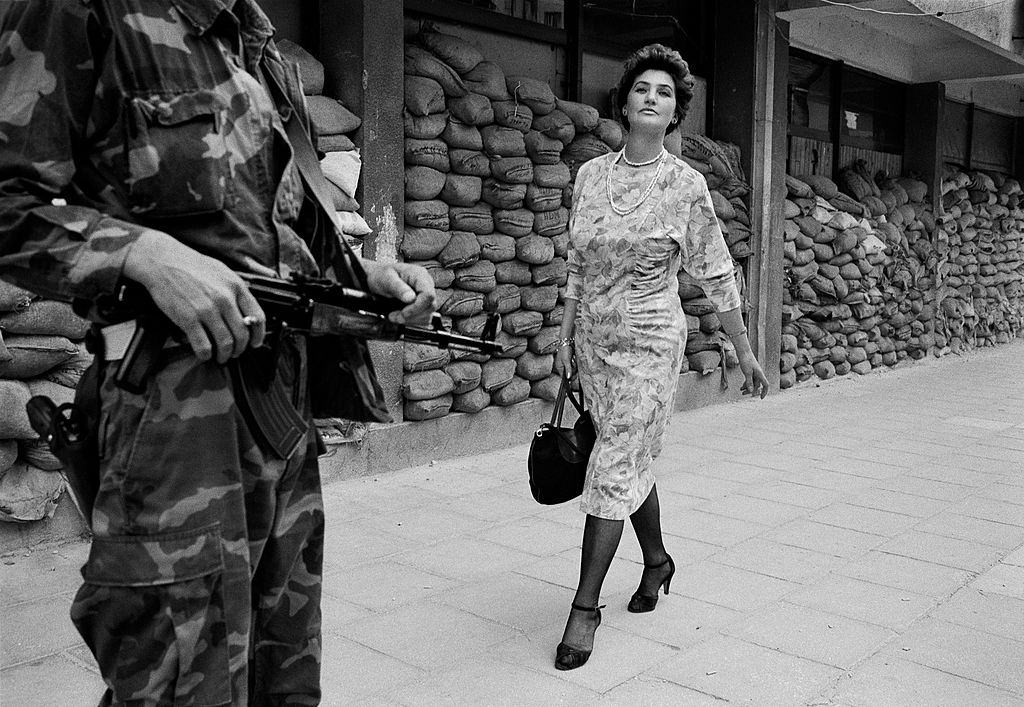
Dobrinja in 1993 was a suburb turned frontline, where ordinary errands could feel like a gamble. Along a wall stacked high with sandbags, Meliha Vareshanovic moves with a measured stride, handbag in hand and head held high, threading through a landscape built for protection rather than comfort. The presence of an armed soldier in the foreground sharpens the contrast between civilian routine and the ever-present danger of the siege of Sarajevo.
What stands out is the deliberate insistence on normality: a patterned dress, heels, jewelry, and an unflinching gaze that refuses to shrink into the background of war. The improvised barricades and hardened street scene frame her as both vulnerable and resolute, a working woman navigating a city under fire. In a conflict often reduced to maps and casualty figures, this moment restores the human scale—style, dignity, and determination carried down a threatened sidewalk.
For readers searching the history of the Bosnian War, the siege of Sarajevo, and the daily life of civilians in besieged neighborhoods, this photograph offers a powerful entry point. It speaks to civil wars as lived experience: the tension between survival and identity, fear and defiance, disruption and routine. One person’s walk to work becomes a quiet act of resistance, etched into the visual memory of Sarajevo’s darkest years.