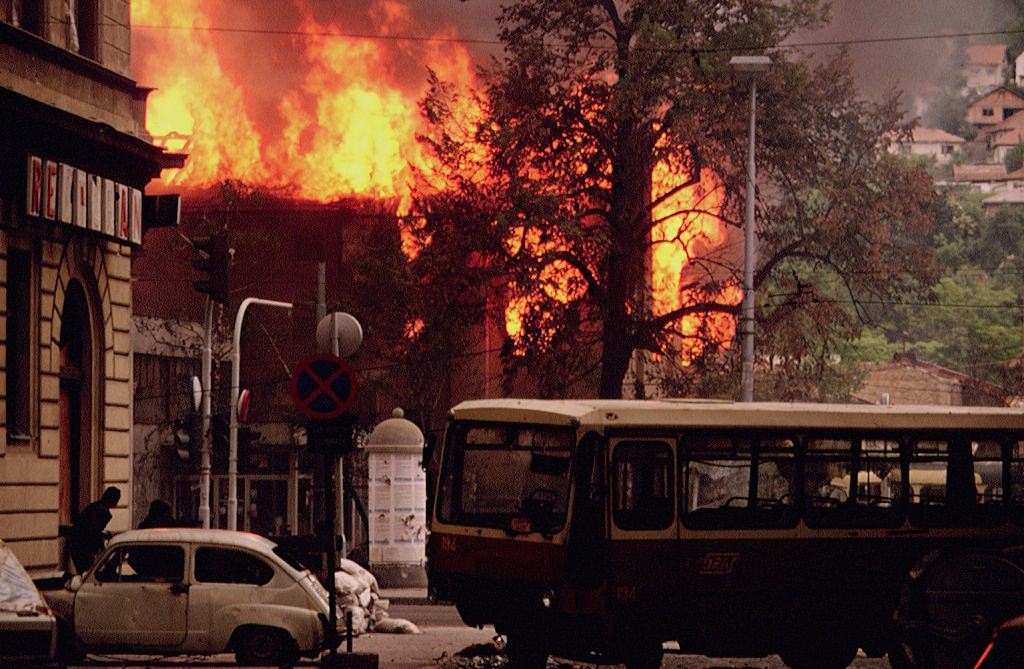
Flames tower over a city street as a large building burns behind a line of trees, turning the sky into a harsh orange glow. In the foreground, a bus sits stranded near parked cars and piles of sandbags, while traffic signs and streetlights look suddenly fragile against the scale of the blaze. The scene is crowded with everyday urban details—shopfronts, windows, and vehicles—made surreal by the violence unfolding just beyond the curb.
Bosnia’s civil war is often remembered through front lines and political maps, but photographs like this pull the focus back to ordinary streets where civilian life and combat collided. The sandbag barricades hint at improvised defenses, and the bus suggests disrupted routines—commutes, errands, and the basic movement of people through their own neighborhoods. Even without visible fighters, the image communicates the constant presence of danger and the speed with which familiar places could be transformed into targets.
For readers searching the history of the Bosnian conflict, this photo underscores how urban warfare reshaped towns and cities, leaving residents to navigate burning buildings, blocked roads, and the uncertainty of the next strike. It is a stark record of destruction amid recognizable architecture and infrastructure, and a reminder that “civil war” is not an abstract term but a lived environment of smoke, heat, and sudden loss. Seen today, the photograph invites reflection on resilience, memory, and the long shadow such violence casts over communities.