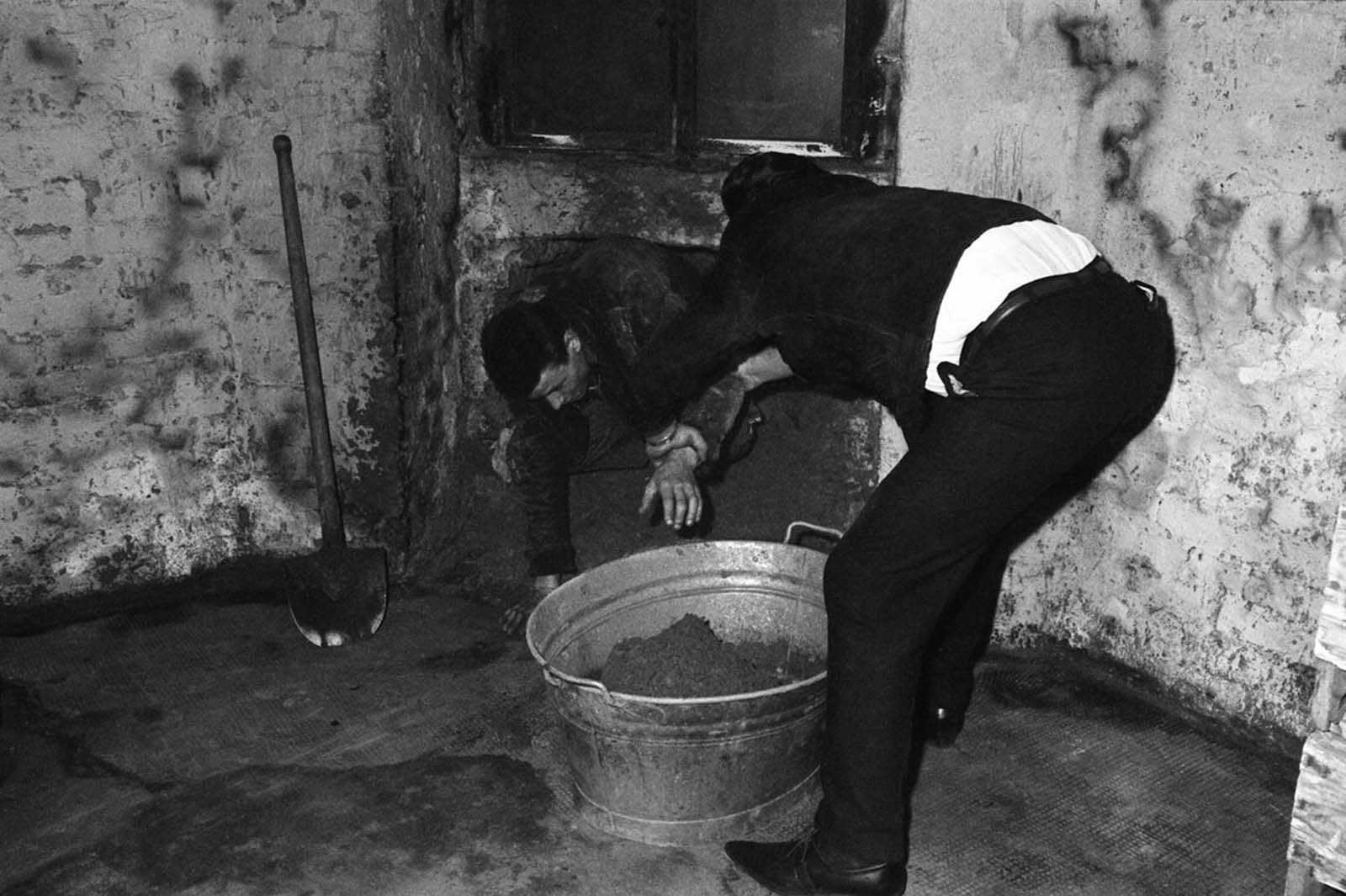
Gritty masonry walls and a low, shadowed opening set the scene as a man hauls himself up from the floor, helped by another figure leaning in with urgent care. A shovel stands propped against the wall and a metal tub waits in the foreground, mundane tools that suddenly read like lifelines. The cramped room feels improvised and tense, with damp-looking surfaces and hard edges that underline how close, literally, the escape route must have been.
According to the title, the moment comes from a daring Berlin Wall tunnel escape in June 1962, when six West Berliners dug a tunnel only about 20 inches wide beneath a border street to East Berlin. The physical strain is written into the posture—one body folded low, the other braced and gripping for leverage—suggesting exhaustion after a crawl through darkness and dirt. Even without a panorama of the divided city, the photograph conveys the Cold War’s intimate geography: freedom and danger measured in inches.
Tunnel stories like this sit at the intersection of resistance, ingenuity, and the everyday logistics of survival in divided Berlin. The bucket of soil hints at the endless problem of concealment—where to put the earth, how to keep noise down, how to keep the passage from collapsing—while the stark interior offers no romance, only necessity. For readers searching Berlin Wall history, East to West escape attempts, or Cold War Berlin photographs, this image anchors the era in a single, human-scale struggle to cross an enforced border.