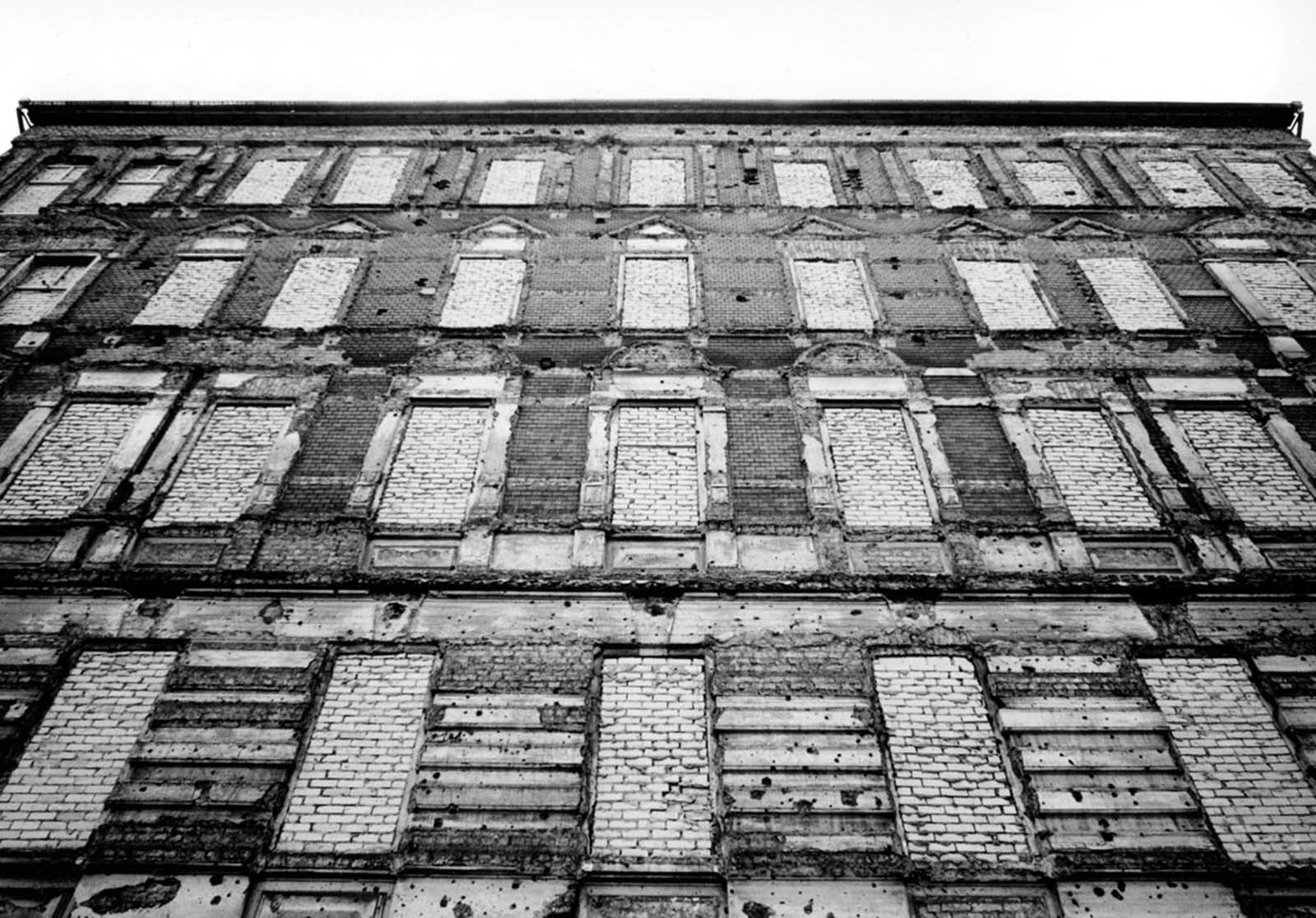
Rising like a sealed ledger against the sky, the façade is a rhythm of rectangles where windows should be—each opening packed tight with brick. The camera angle emphasizes height and repetition, turning ordinary architecture into an imposing barrier, and the scarred masonry reads as both hurried work and deliberate message. Even without a crowd in frame, the building feels watched, edited, and transformed into part of a border system.
The title situates this scene in 1962, when escapes from East to West forced the authorities on the eastern side of the Berlin Wall to close off any “weak points,” including upper-story windows that could become launchpads to freedom. Bricking over was more than a practical fix; it was a visible act of control, converting private apartments into dead space and erasing the possibility of a sudden jump, a rope, a helping hand from the other side. The blanked-out windows become a kind of anti-landscape—no view out, no view in, only closure.
Later demolition completed what the bricks began, removing the structure entirely and leaving the memory to photographs and testimony. For readers interested in Cold War history, the Berlin Wall, and the everyday mechanics of division, this image distills the story into textures: mortar, patched surfaces, and openings turned into walls. It’s a stark reminder that political conflict often writes itself onto streets and homes first, long before it appears in speeches or treaties.