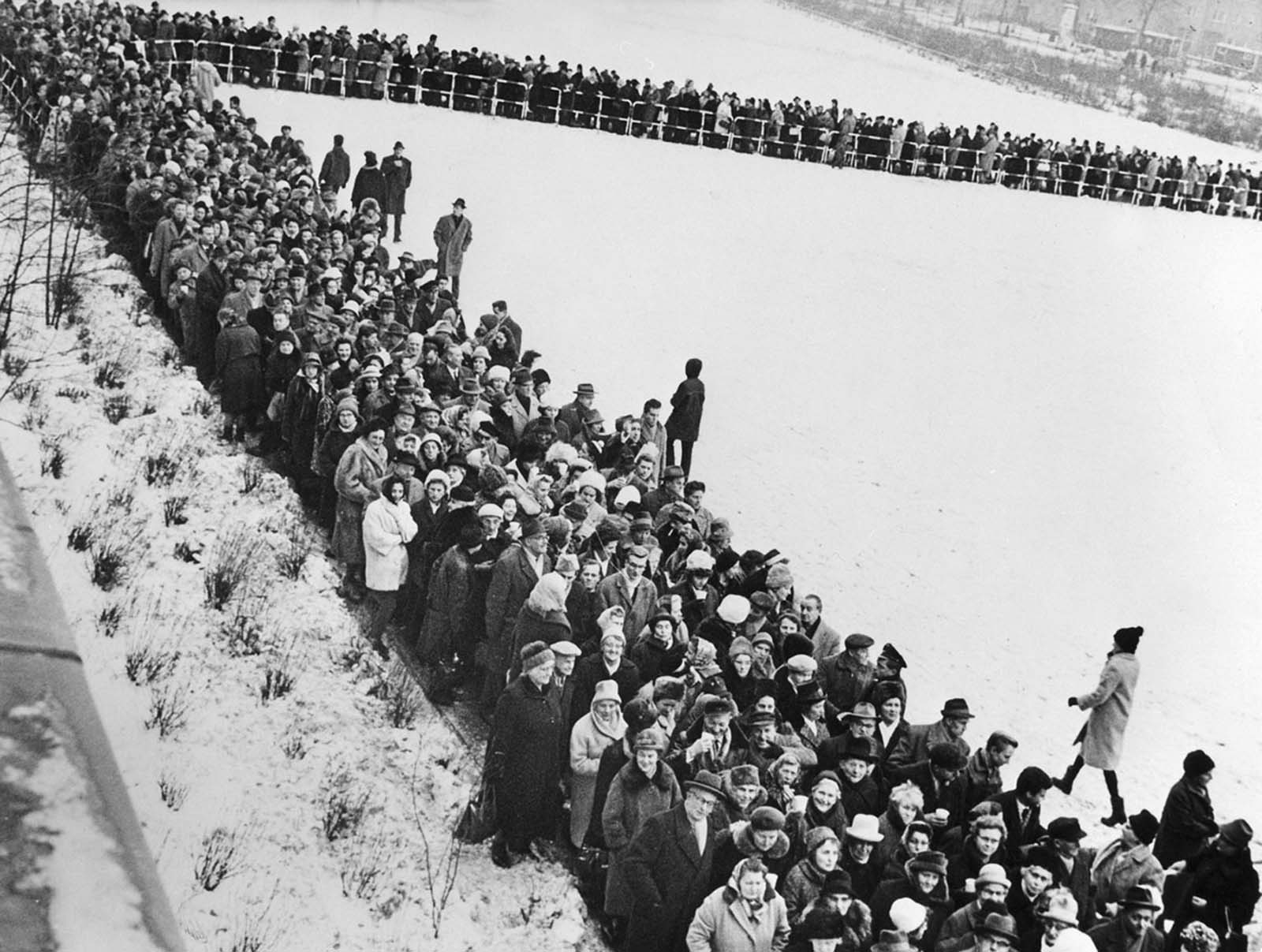
Along the snow-edged curve of Schillerstrasse in Charlottenburg, Berlin, a human river forms—thousands packed shoulder to shoulder, their winter coats and hats turning the line into a dense, dark ribbon against the pale ground. The queue bends far into the distance, corralled by simple barriers that try to impose order on a moment charged with urgency. From this high vantage point, the scale is unmistakable: a city waiting, quietly but insistently, for permission to move.
Faces in the foreground look up toward the camera with the wary patience of people who have learned that borders are not only walls but also paperwork, stamps, and hours spent standing still. Some clutch bags or documents; others huddle close for warmth, the cold made sharper by the knowledge that the destination is near yet uncertain. The title’s date—December 19, 1963—anchors the scene in the early Berlin Wall era, when a “passage slip” could briefly reunite families and friends separated by political lines drawn through everyday life.
Schillerstrasse becomes more than a street in this historical photo; it reads like a map of Cold War Berlin, where movement was rationed and hope often arrived in the form of temporary permission. The long line evokes the social strain and civic tension that accompanied divided cities, a quieter kind of conflict echoed in the post’s theme of “Civil Wars.” For readers searching Berlin Wall history, border crossing permits, and daily life in 1960s West Berlin, the image offers an unforgettable reminder of how extraordinary an ordinary journey could become.