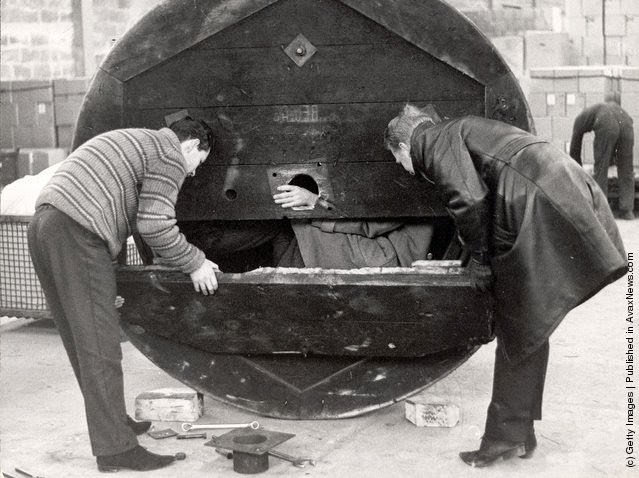
Bent over the gaping mouth of a hollow metal drum, two men work its heavy lid open while a third figure appears tucked inside, suggesting the unnerving intimacy of improvised concealment. The scene feels less like a workshop task than a revelation—hands testing seams, eyes searching the interior, the blunt circular shell turned into a temporary refuge. In the background, stacked materials and an industrial setting underline how ordinary objects could be repurposed for extraordinary risks.
In 1965 Berlin, the border between East Berlin and West Berlin was not only a line on a map but a daily reality that shaped romance, family, and survival. The title frames this drum as a tool used by West German men to bring their girlfriends across that divide, a reminder that escape attempts often depended on ingenuity as much as courage. What reads at first like mechanical curiosity becomes, with context, a snapshot of Cold War desperation—where love and loyalty collided with surveillance and controlled movement.
Details like the drum’s thickness, the improvised openings, and the men’s cautious posture invite the viewer to imagine the sound, heat, and claustrophobia endured by anyone hidden within. It’s an arresting historical photo from divided Germany that speaks to Berlin Wall history without needing grand monuments: just metal, labor, and a split-second glimpse of what secrecy looked like. For readers searching for stories of East Germany, West Germany, and daring border crossings, this image offers a stark, human-scale entry point into the era’s quiet battles.