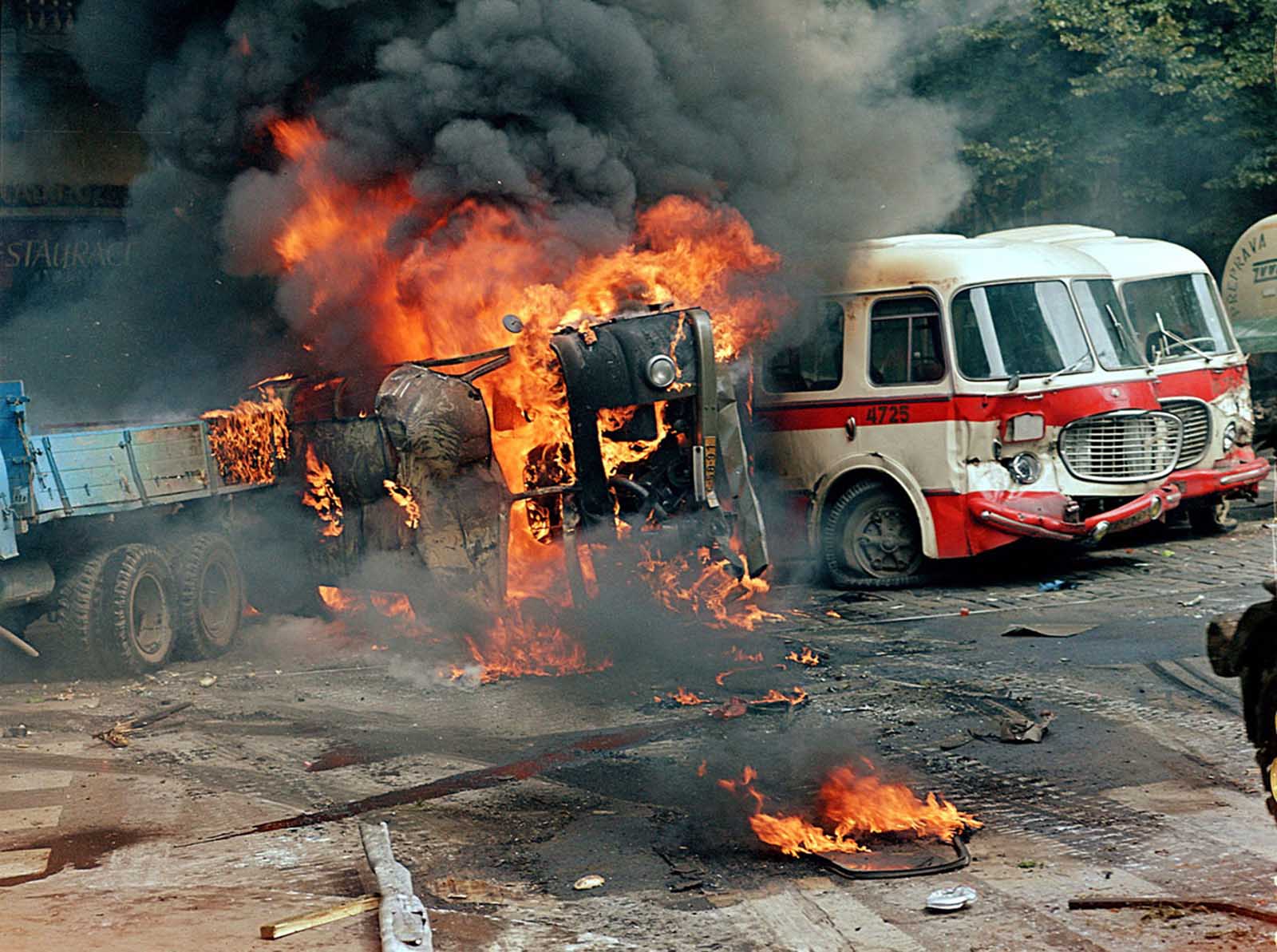
Flames roar from an overturned truck while a thick, oily column of smoke rolls upward, turning the street outside the Czechoslovak Radio building into a furnace. Nearby, a red-and-cream bus sits close enough to catch the heat, its windows reflecting the orange light and the chaos around it. Scattered debris and small patches of fire on the pavement hint at how quickly an everyday roadway in central Prague became a frontline.
On August 21, 1968, the Radio building was far more than an address on a map—it was a symbol of information, urgency, and national voice at a moment of extreme pressure. Barricades improvised from trucks and buses speak to street-level resistance: heavy vehicles repurposed as obstacles, turned into shields, and ultimately consumed by fire. The scene’s color and clarity intensify the sense of immediacy, capturing not only destruction but the determination behind it.
Searchers of Prague 1968 history often return to images like this because they compress the stakes into a single frame: transport halted, communication contested, and public space transformed. The smoke that blots out the background also suggests what cannot be fully seen—crowds just beyond the edge, decisions made in seconds, and the fearful quiet after the flames subside. As part of a broader story of civil conflict and political upheaval, this photograph remains a stark reminder of how quickly a city can be forced to defend its voice.