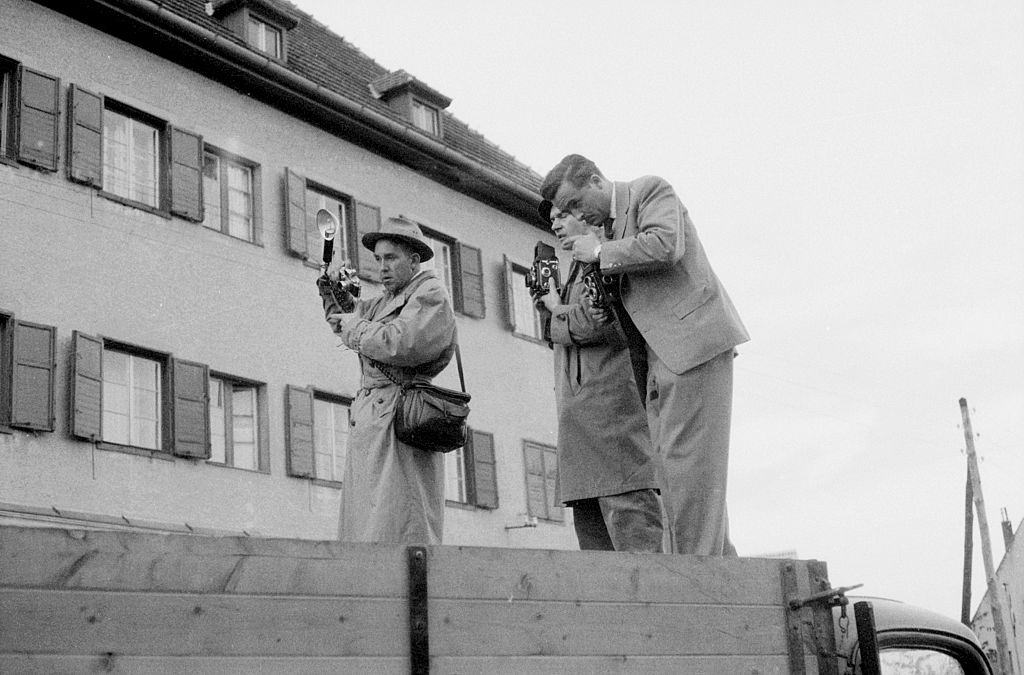
Perched on the back of a van, three photographers steady their cameras and lean into the moment, turning a makeshift vehicle into a moving platform for reportage. Coats, hats, and camera straps hint at hurried travel and cold autumn air, while the clustered stance suggests both urgency and mutual reliance. The street around them is only partly revealed—shuttered windows and plain facades forming a quiet backdrop to work that is anything but routine.
Budapest, 30th October 1956, places the scene inside the Hungarian Uprising, when information, images, and eyewitness accounts became contested tools in a rapidly shifting struggle. Rather than the clash itself, the frame lingers on the act of documenting: hands adjusting lenses, a viewfinder raised, a colleague close by for balance. In that choice lies a powerful reminder that civil conflict is recorded not only by participants and victims, but also by observers who risk being caught in the same turbulence they are trying to explain.
Details in the photograph invite a closer read for anyone interested in 1956 Budapest, photojournalism, and the visual history of revolution. The elevated vantage point suggests they are searching for a clear line of sight above crowds and barricades, capturing what newspapers and archives would later rely upon to narrate events. For a WordPress post exploring civil wars and public memory, this image underscores how quickly a city can become a battlefield—and how a single shutter click can preserve the texture of upheaval for generations.