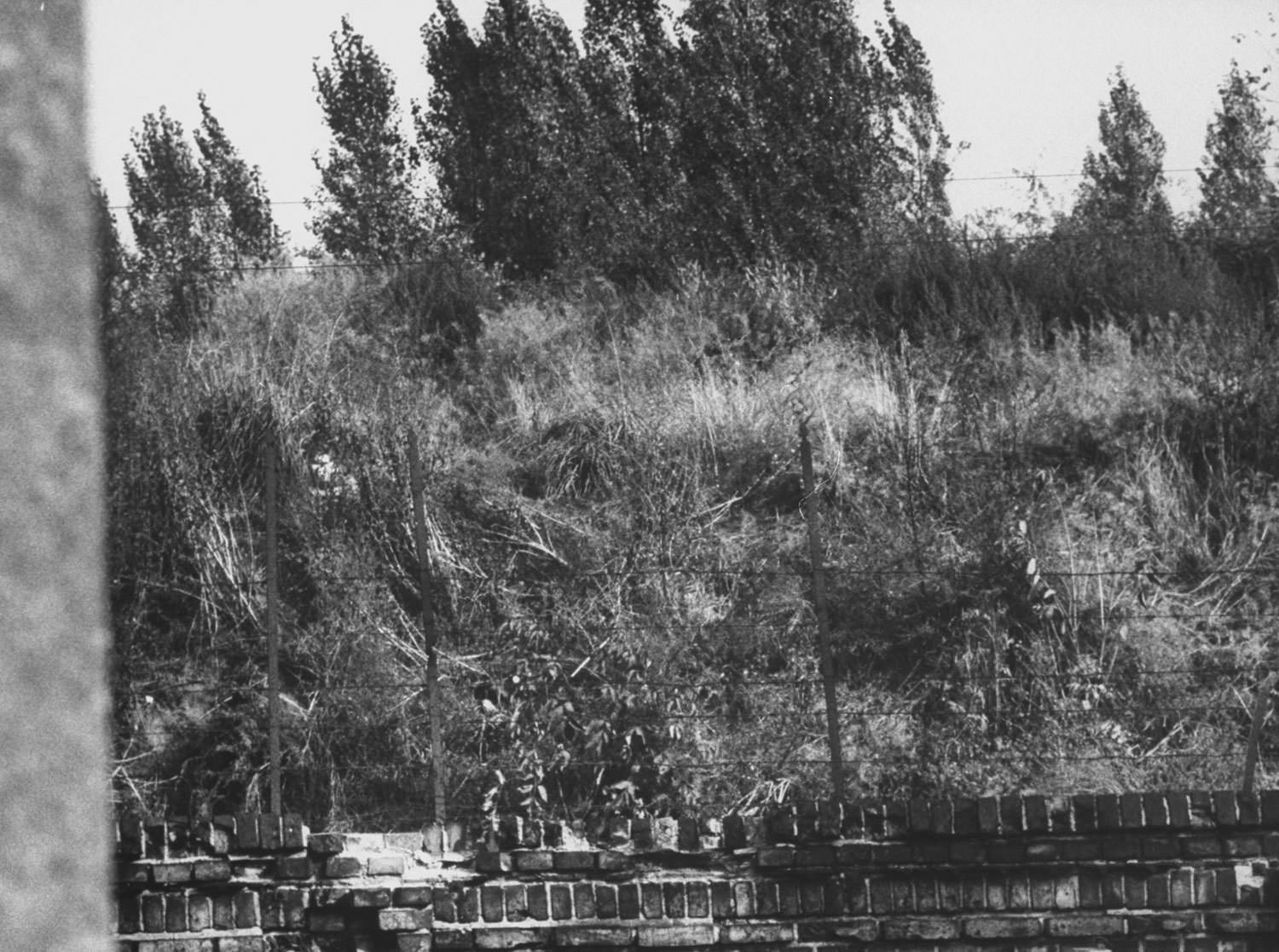
Wind-tossed trees and a rough slope of weeds fill the frame, but the real drama lies at the far left, where an East German teen is said to be crouched in tall grass, waiting for the split second that might carry him over the Berlin Wall. A low brick barrier runs along the bottom edge, topped with posts and wire that sketch the early, improvised look of the border in 1961. The emptiness feels deliberate, a landscape made into a trap where stillness could be the only cover.
In October 1961, the Wall was no distant symbol; it was a newly hardened line that turned ordinary ground into a contested frontier. The photo’s quiet textures—bent stalks, uneven fencing, and the stark boundary of masonry—hint at how quickly everyday spaces were militarized during the Cold War. Even without soldiers or crowds in view, the tension is palpable, because the scene invites the viewer to search, to suspect movement, to imagine consequences.
Seen today, this moment reads like a condensed history of Berlin’s division: a teenager’s fear and hope set against the machinery of a state border. The title’s detail, “far left,” pushes us to look harder, reminding us that many escape attempts were hidden in plain sight and carried out in landscapes that now seem almost ordinary. For readers exploring Berlin Wall history, East Germany escape stories, or the early days of 1961 border security, the photograph offers a haunting reminder that the Cold War was lived one breath, one hiding place, and one leap at a time.