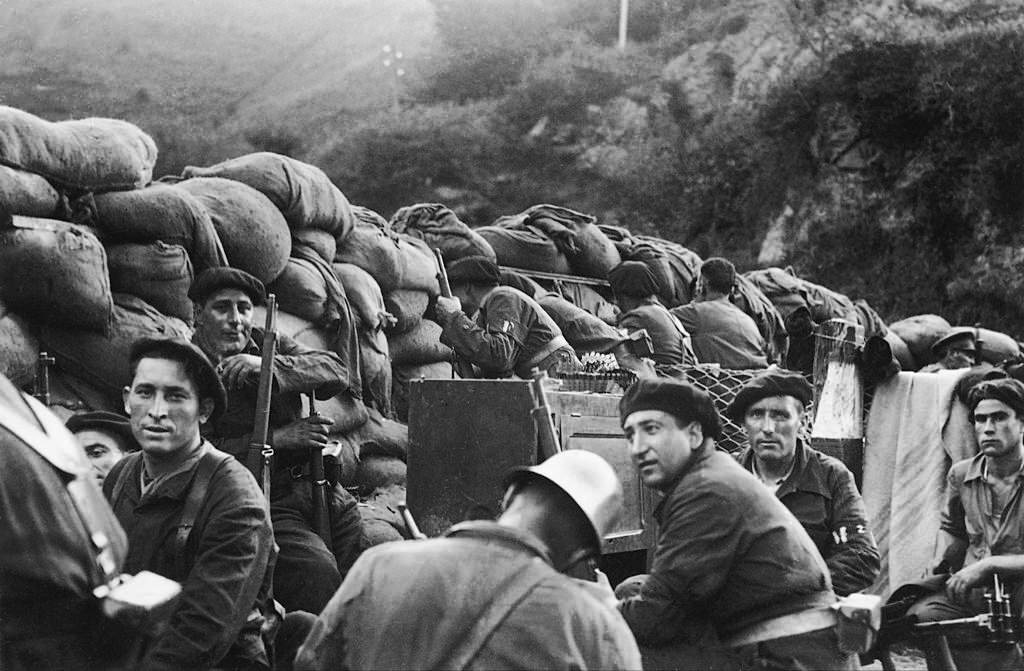
Huddled behind a high wall of sandbags on the slopes above Irun, a group of Spanish militiamen wait in the tense lull that so often precedes a clash. Faces turn toward the camera with a mix of fatigue and wary alertness, while rifles and helmets crowd the foreground, making the position feel cramped and improvised. The rugged Basque landscape behind them—rock, brush, and rising ground—frames the scene as a defensive outpost carved into the hillside.
Along the barricade, the everyday texture of war is unmistakable: bundled supplies, rough clothing, and men seated shoulder to shoulder in a space built for survival rather than comfort. Some appear to confer quietly; others stare outward, as if listening for movement beyond the ridge. The sandbags dominate the composition, turning earth and cloth into architecture, and suggesting how rapidly the Spanish Civil War forced civilians and volunteers alike into the routines of frontline life.
Set on September 4, 1936, this photograph anchors a specific moment in the early fighting around Irun in the Basque Country, when control of roads, slopes, and crossings mattered as much as numbers. Its power lies in the immediacy of waiting—an interval where fear, determination, and uncertainty share the same trench line. For readers exploring Spanish Civil War history, images like this offer more than documentation: they reveal how conflict reshapes landscapes and the people who stand watch within them.