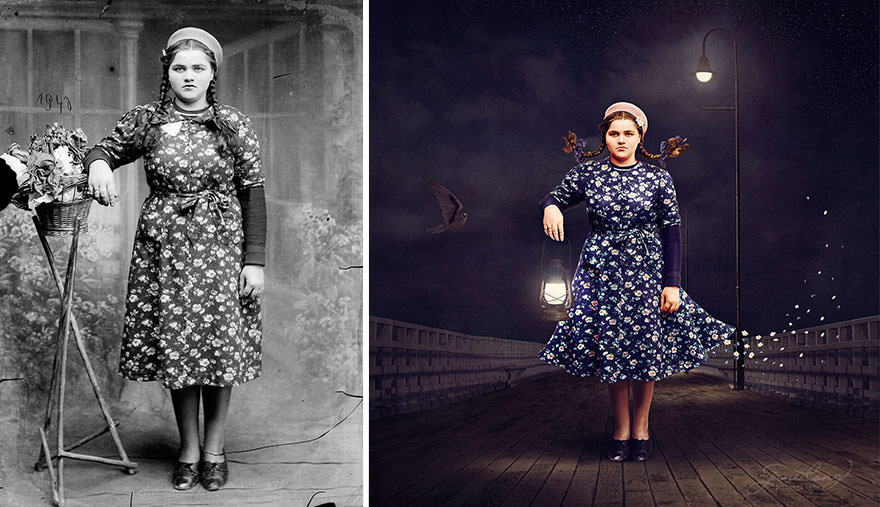
A young woman stands front and center, her posture steady and her gaze unflinching, dressed in a patterned, floral dress with darker sleeves and a light head covering that frames her face. In the original glass-plate look, the studio setting feels plain and utilitarian, with props at the edge hinting at a staged portrait made for record-keeping as much as remembrance. Every crease in the fabric and every highlight on her shoes reads crisply, the kind of sharp detail that makes early photography so captivating for today’s viewers.
On the recolorized side, the same figure is lifted out of documentary stillness and placed into a moody, cinematic nightscape, where deep blues and soft lamplight reshape the emotional temperature of the scene. The dress becomes richly saturated, the air seems to move, and the composition leans into symbolism rather than strict realism—an artistic reimagining that invites you to see personality and atmosphere where the monochrome plate offered restraint. That shift is the heart of conceptual colorization: not only restoring “color,” but building a narrative around it.
Between the archival portrait and the modern reinterpretation lies a fascinating conversation about how we engage with historical photos in the digital age. Glass-plate photography preserves faces and clothing with remarkable clarity, while imaginative recoloring can make these images feel immediate to contemporary audiences browsing a WordPress gallery or searching for historic photo colorization online. It’s a reminder that preservation and creativity aren’t opposites here; they’re two ways of keeping the past present.