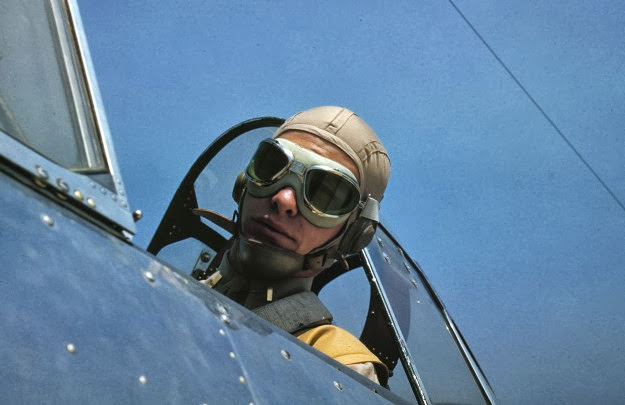
Leaning out of the cockpit with goggles pulled tight and a leather flying helmet snug under the chin, a U.S. Marine lieutenant glider pilot meets the camera with the calm focus of someone still learning a dangerous craft. The colorization brings out the hard gleam of the aircraft’s metal skin, dotted with rivets, and the deep, open blue of the South Carolina sky. Details like the headset, harness, and cockpit framing place the viewer right at the edge of wartime aviation training.
At Page Field on Parris Island in 1942, glider instruction represented a specialized and demanding corner of Marine Corps preparation, requiring discipline, quick judgment, and an engineer’s respect for air and weight. Unlike powered flight, glider operations depended on precise control and nerve once the tow ended, with pilots expected to put an aircraft down where it was needed, often under pressure. The tight crop and upward angle emphasize that sense of readiness, suggesting a moment between drills rather than a staged portrait.
For readers searching WWII Marine aviation history, glider pilot training, or Page Field Parris Island photographs, this image offers a vivid, human-scale view of preparation behind the headlines. The softened tones of the colorized treatment do not erase the seriousness in the subject’s expression; if anything, they make the scene feel closer and more immediate. It’s a reminder that wartime capability was built through countless hours in cockpits like this one, where skill was forged long before any mission began.