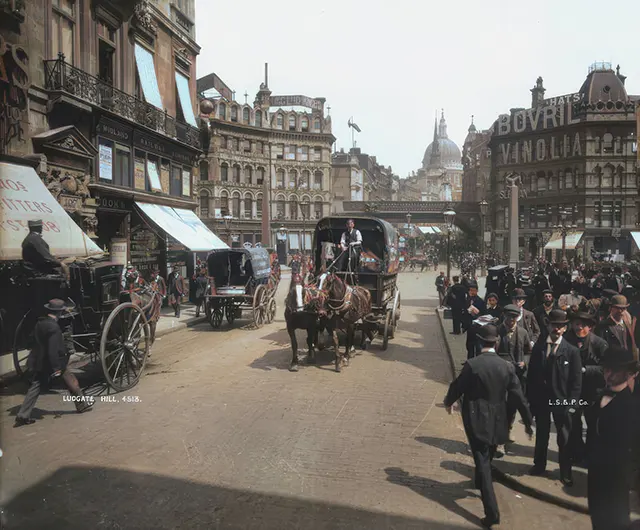
Ludgate Hill feels busy and bright in this 1897 colorization, where a horse and cart move through the center of the roadway amid the daily churn of London street life. The scene is framed by tall commercial buildings and shopfront awnings, with pedestrians clustering at the edges and a steady flow of traffic pressing forward. Even without sound, you can almost sense the rhythm of hooves on cobbles and the negotiation of space that kept the city moving.
Horse-drawn vehicles dominate the view, from carts to enclosed carriages, revealing how transport worked in the capital before motor traffic took over. Drivers sit high and alert, reins in hand, while passersby in dark coats and hats step carefully around the flow, turning the street into a shared stage of work, errands, and commuting. Details like painted signage and street-level advertising add texture for anyone interested in Victorian London commerce and the look of late-19th-century urban streets.
Color brings a fresh immediacy to the architecture and clothing, helping modern readers connect with a moment that can otherwise feel distant. For fans of London history, Ludgate Hill, and everyday Victorian-era life, the photograph offers more than a single subject; it’s a snapshot of a whole system of movement, business, and city crowding in 1897. As you scan the depth of the street, the bustling mix of people and vehicles hints at a metropolis on the brink of rapid change, yet still powered by muscle, patience, and routine.