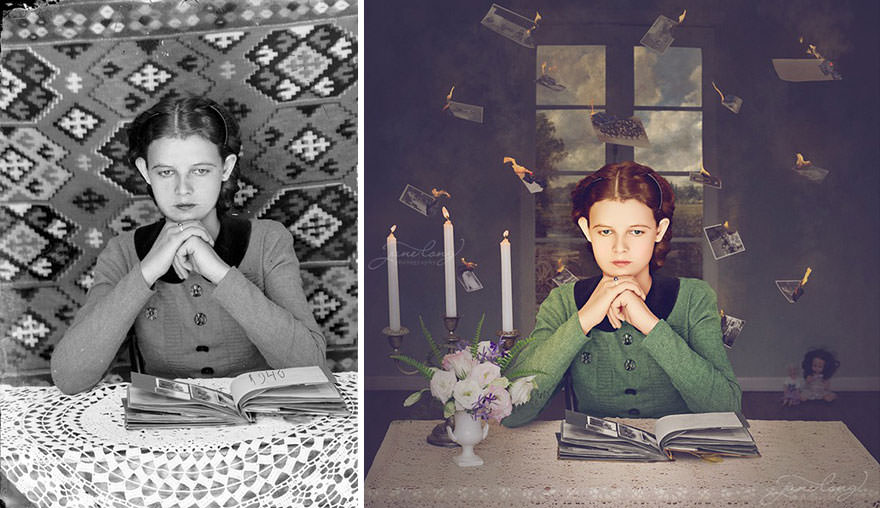
Between the crisp monochrome original and the richly tinted reinterpretation, a young girl sits at a lace-covered table with an open book, hands folded beneath her chin, and a steady, almost challenging gaze. Behind her, a bold geometric textile fills the background in the glass-plate photo, turning the portrait into a study of pattern, posture, and quiet concentration. The scene feels intimate and domestic, yet carefully arranged—one of those everyday moments early photographers preserved with remarkable clarity.
Colorization pushes the image into a different emotional register, trading documentary restraint for conceptual atmosphere. Muted greens and warm skin tones soften the severity of the black-and-white, while a darker interior, tall candles, and a vase of pale flowers create a still-life mood around the sitter. The added floating prints and a window-like glow introduce a dream logic, suggesting memory, imagination, and the way photographs can feel like fragments suspended in time.
For readers drawn to historic glass-plate photography, this post highlights how modern recoloring can function as both restoration and storytelling. The artist’s choices don’t simply “add color”; they invite fresh attention to texture—the lacework, the fabric, the paper edges—and to the human presence at the center of the frame. In that tension between archival record and artistic invention, the portrait becomes a conversation about how we look at the past, and what we hope to find there.