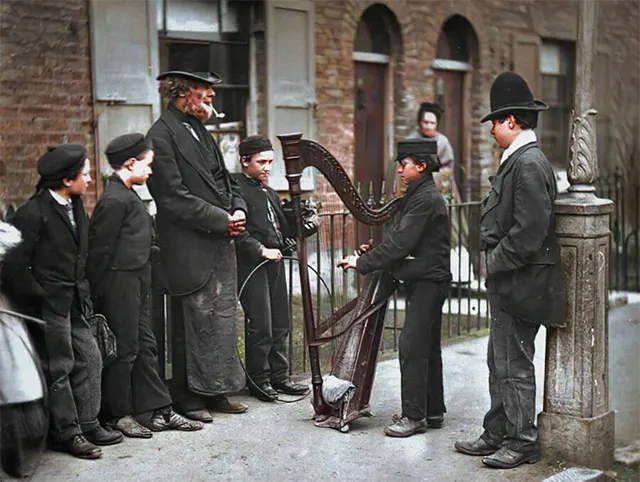
A small crowd gathers along a brick-lined street as a young musician stands beside a tall harp, poised to play for passersby. The onlookers—boys in caps and an older man in a dark coat—lean in with the patient curiosity of neighbors who have paused their errands for a few minutes of live music. With the colorization bringing out worn fabrics, scuffed shoes, and the muted tones of the buildings, the scene feels immediate, like a fleeting moment rescued from everyday life.
Street musicians were a familiar part of urban culture in the 1890s, offering entertainment where people actually lived and walked rather than behind the doors of concert halls. The harp’s presence suggests both skill and spectacle; it’s an instrument that turns a sidewalk into a stage, inviting coins, conversation, and the kind of attention that lingers even after the last note fades. Details like the iron railing, doorway arches, and the layered clothing hint at a working-class neighborhood where public space doubled as a social commons.
For anyone searching for Italian street musicians, 1890s social history, or early street performance traditions, this photograph provides a textured glimpse into the era’s informal music economy. It’s also a reminder that “public performance” didn’t require posters or tickets—just an instrument, a good spot on the street, and people willing to stop and listen. The careful colorization adds warmth without erasing the rough edges, helping modern viewers imagine the soundscape that once echoed between those brick walls.