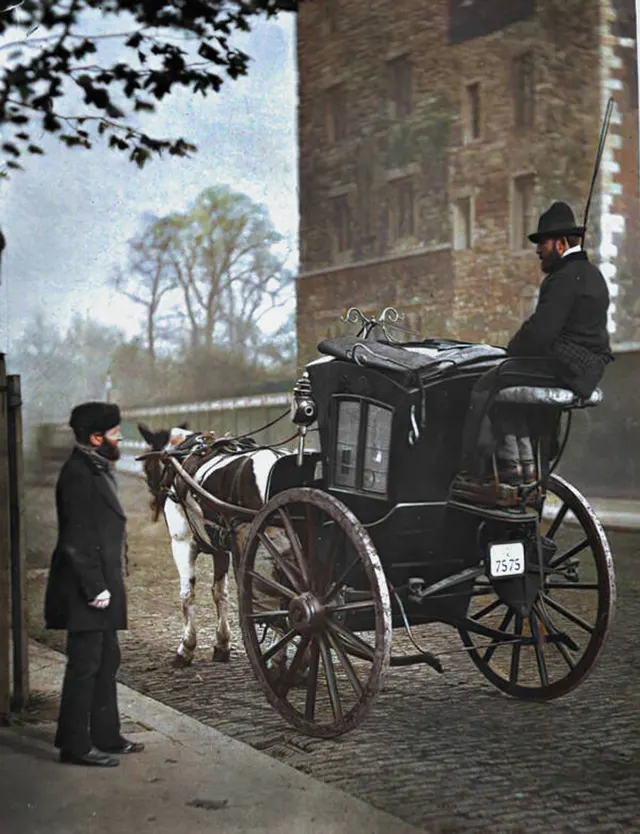
Perched high on the rear seat of a hansom cab, a London driver waits with the stillness of someone used to long stretches between fares. The cab’s polished bodywork, the tall wheels, and the neatly fitted harness draw the eye, while the horse stands patient at the curb, ready to spring into the street at a click of the reins. In the colorization, muted tones lend an everyday realism to the scene, turning a distant era into something you can almost hear—hoofbeats, leather creak, and street-side murmurs.
Nearby, another man stands facing the cab, bundled in dark outerwear, as if negotiating a ride or pausing mid-conversation. The driver’s posture suggests practiced authority and balance, elevated above the roadway with a clear view ahead, a working vantage point in a city built for traffic that moved at the speed of animals. Details like the cab’s number plate and the cobbled road surface anchor the moment in the practical routines of 1890s urban transport rather than grand spectacle.
Before motor taxis remade London’s streets, the hansom cab served as a swift, maneuverable option for those who could afford it, and its drivers were a familiar part of the capital’s daily rhythm. Scenes like this hint at the hidden labor behind Victorian mobility: caring for the horse, navigating weather and crowds, and spending hours on call for a single journey. For readers drawn to London history, Victorian life, and the evolution of public transportation, this colorized photograph offers a vivid window into how the city once moved.