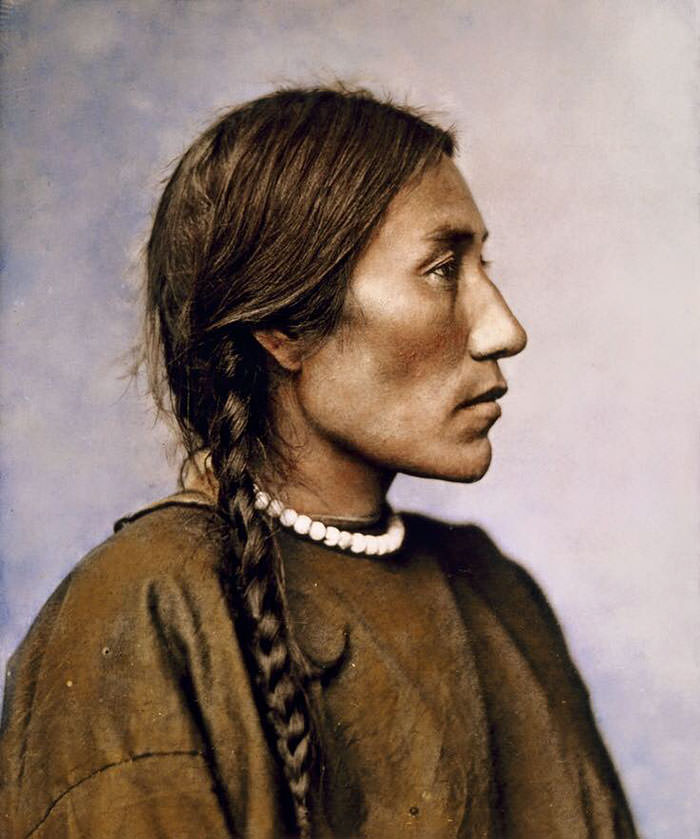
Quiet strength radiates from the side-profile portrait titled “Mrs. Bad Gun,” photographed in Cheyenne in 1879 by L. A. Huffman. The sitter’s long, dark braid falls neatly over her shoulder, and a simple beaded necklace catches the light against a plain garment, drawing the eye to the careful balance of texture and form. Her gaze stays fixed beyond the frame, lending the composition a sense of purpose rather than performance.
Colorization brings an immediate intimacy to what began as a 19th-century studio image, softening the starkness often associated with frontier-era photographs. Subtle tones in skin, hair, and clothing make the portrait feel less distant, while the neutral backdrop keeps attention on posture and expression. The result is a dignified, close study of a Cheyenne woman rendered with striking clarity.
Huffman’s work is frequently linked with the visual record of the American West, and this portrait stands as a reminder that the era was shaped by Indigenous lives as much as by rail lines, towns, and military posts. For readers searching for Cheyenne history, Native American portrait photography, or L. A. Huffman’s images, “Mrs. Bad Gun” offers a powerful point of entry—one face, one moment, and an enduring presence that resists being reduced to stereotype or scenery.