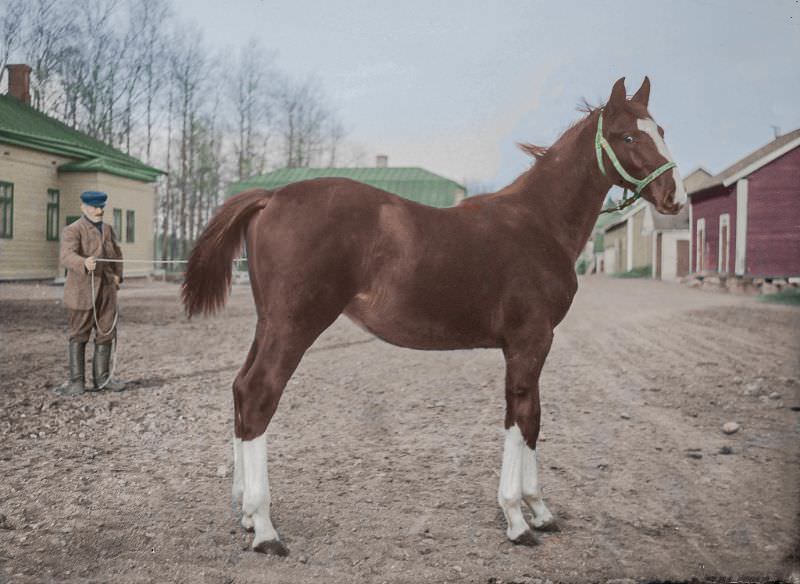
Lean and alert in the yard of Pickala mansion, the Hanoverian stallion foal Khedio stands in crisp side profile, his chestnut coat brought to life through careful colorization. A pale blaze and clean white stockings pick out the lines of his legs, while a green halter adds a small, modern-feeling accent against the muted tones of the estate buildings. Even at this young age, the colt’s poised stance suggests the deliberate way fine horses were assessed and presented.
Behind him, the everyday architecture of a Finnish manor farm frames the scene: low wooden structures with painted facades, green roofs, and a gravel surface marked by hard use. A bundled handler in cap and boots waits at the end of the lead, keeping a respectful distance so the foal’s conformation can be seen clearly. Bare trees along the horizon hint at a cool season, reinforcing the northern setting named in the title—southern Finland in 1931.
For readers interested in equine history, Hanoverian breeding, or Finnish estate life between the wars, this photograph offers more than a portrait of a single animal; it’s a window into rural management and the prestige attached to imported bloodlines. The colorized treatment emphasizes textures—coat, timber, and sky—without overwhelming the period feel, making it especially striking for a WordPress post about historical horses and heritage mansions. Khedio’s calm presence anchors the image, connecting the routines of a working yard with the aspirations of careful breeding.