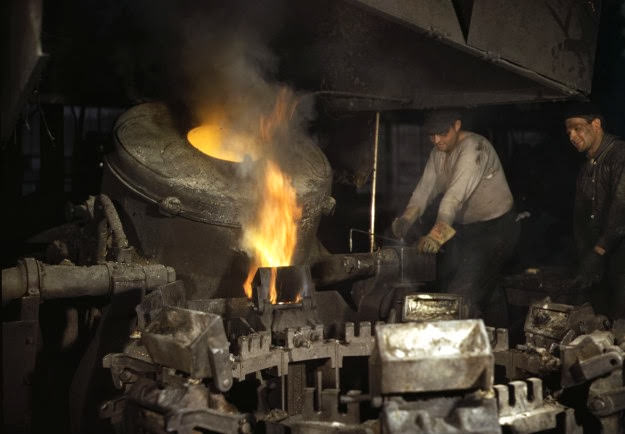
Molten metal pours in a bright, controlled stream as workers guide the cast at Chase Brass and Copper Co. in Euclid, Ohio, in 1942. The electric furnace dominates the scene, its heat spilling into the dim industrial bay while flames and smoke curl upward under heavy overhead equipment. In the foreground, a line of molds and metal containers hints at a steady rhythm of production, where every pour had to be precise.
Factory work of this kind demanded coordination, stamina, and hard-won skill, especially when handling a billet fresh from the furnace. Gloves and work clothes offer minimal protection against the glare and intensity of the melt, and the cramped arrangement of tools and molds suggests how tightly organized the foundry floor needed to be. Even in a single moment, the photo conveys the tension between raw power and careful technique that defined brass and copper manufacturing.
For readers searching military-era industry, Ohio manufacturing history, or World War II home-front production, this colorized view brings an often abstract story down to human scale. The added color emphasizes the furnace’s orange-white heat against the soot-dark machinery, making the environment feel immediate rather than distant. It’s a reminder that behind wartime output and industrial growth were real workplaces—loud, hazardous, and essential—where metal was transformed one pour at a time.