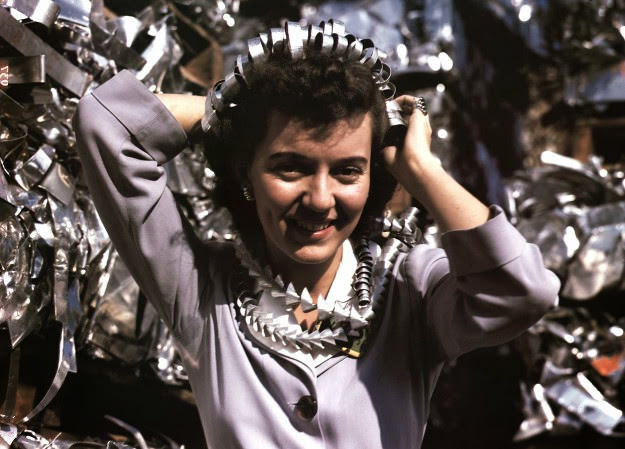
Against a glittering backdrop of curled metal shavings, Annette del Sur smiles as she models a headpiece and necklace made from salvaged material at the Douglas Aircraft Company in Long Beach, California, in 1942. The colorized look heightens the contrast between her neat work attire and the reflective scrap around her, turning industrial leftovers into an attention-grabbing symbol. What might otherwise read as factory waste becomes stagecraft for a wartime message.
Salvage campaigns were a daily reality on the home front, pressing workers and communities to reclaim metal and other resources for production and repair. In an aircraft plant, where precision and output mattered, even small amounts of recoverable material carried meaning—both practical and psychological—reinforcing the idea that nothing should be thrown away when supplies were strained. The playful costume here works like a visual slogan, making conservation memorable without needing a poster’s text.
Colorization invites modern viewers to linger over textures: the silvery coils, the sharp-edged ribbons of scrap, and the soft fabric of a jacket that reads as both office-ready and factory-appropriate. It also frames the human side of wartime industry, where morale, creativity, and persuasion stood alongside machines and schedules. For anyone searching World War II home front photography, Douglas Aircraft history, or Long Beach wartime production, this scene offers a vivid reminder that publicity and participation were part of the assembly line too.