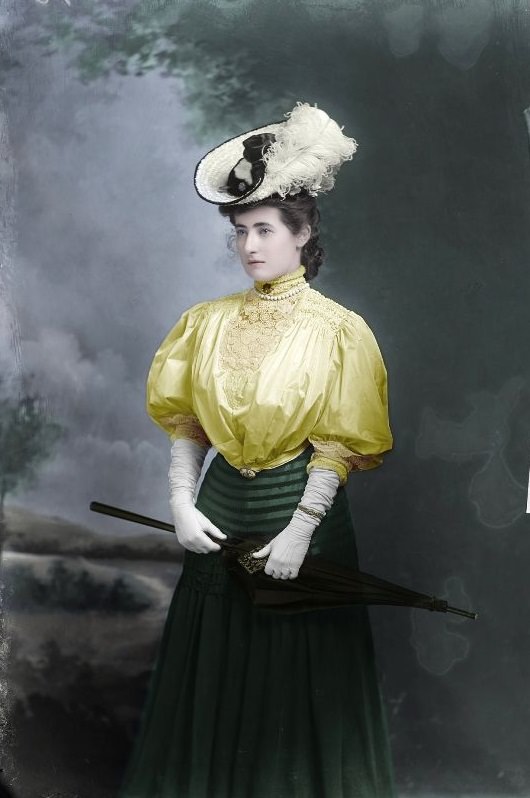
Elegance is the first thing that comes through in “E. Luin,” a carefully colorized studio portrait of a well-dressed woman posed against a softly painted backdrop. Her outfit is rich with late-19th to early-20th century fashion cues: a high, lace-trimmed bodice, dramatically puffed sleeves, and a wide-brim hat crowned with pale feathers. The delicate palette—warm yellow satin against deeper greens—gives the portrait a lifelike presence while still preserving the formal calm of the original photograph.
Held at an angle across her gloves, the closed parasol reads as both accessory and symbol, hinting at outdoor leisure brought indoors for the camera’s sake. The fitted waist and long skirt emphasize the period silhouette, while the layered neck detailing and jewelry suggest someone dressed for an occasion rather than everyday wear. Even without a named place or date, the styling and posture speak to a moment when portrait photography was a deliberate performance of status, taste, and modernity.
Colorization here doesn’t simply add pigment; it draws attention to texture—satin sheen, lace intricacy, and the soft plume of the hat—inviting a closer look at how clothing and studio craft shaped identity. For readers searching family history inspiration, antique fashion references, or restored photographic portraits, this image offers a vivid example of how a single sitter can carry an era’s aesthetics. “E. Luin” remains enigmatic, yet the details provide plenty to linger over, as if the studio’s hush has been preserved along with her steady gaze.