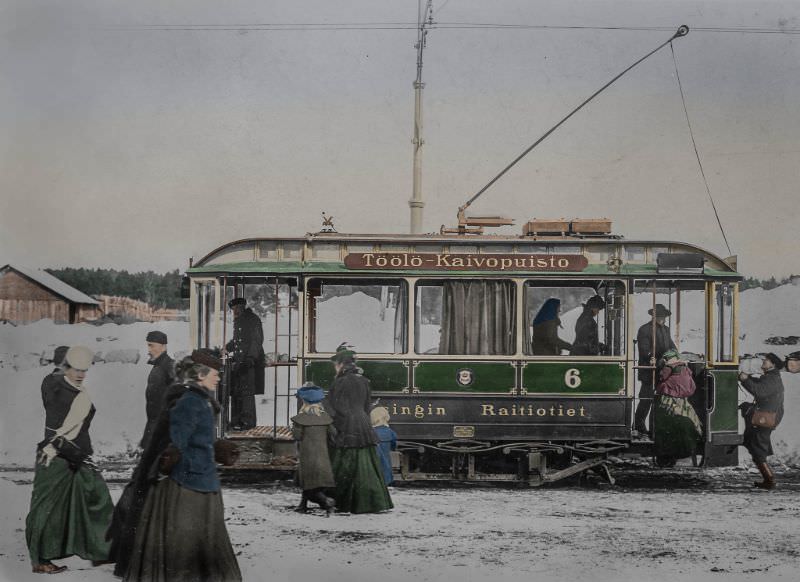
Green panels and gold lettering give this Helsinki streetcar a crisp presence against the snow, and the destination sign reads “Töölö–Kaivopuisto,” hinting at the everyday routes that stitched the city together in the 1930s. Overhead wires and the trolley pole trace a clean line through the pale winter sky, a reminder that electrified transit was already a mature part of the urban landscape. Along the side, “Helsingin Raitiotiet” and the number 6 place the car within the municipal tram network, turning a simple moment into a document of public transport history.
Winter clothing sets the scene as clearly as the rails: long skirts, heavy coats, and hats move past the tram in a small bustle of boarding and walking. A conductor stands by the open doorway while riders gather near the steps, their faces turned toward the warmth and motion inside. Through the windows, curtains and silhouettes suggest a cozy interior compared with the slushy ground outside, capturing the contrast that made streetcars so essential during Nordic cold snaps.
Colorization brings new immediacy to the details—paintwork, signage, and fabric tones—without changing the underlying story of routine city life. The wide, snowy surroundings and sparse buildings in the distance also speak to how Helsinki balanced open spaces with growing neighborhoods, even as modern infrastructure expanded. For anyone searching for a 1930s Helsinki tram photo, Finnish streetcar history, or “Töölö–Kaivopuisto” route imagery, this scene offers a vivid, human-scale window into the capital’s past.