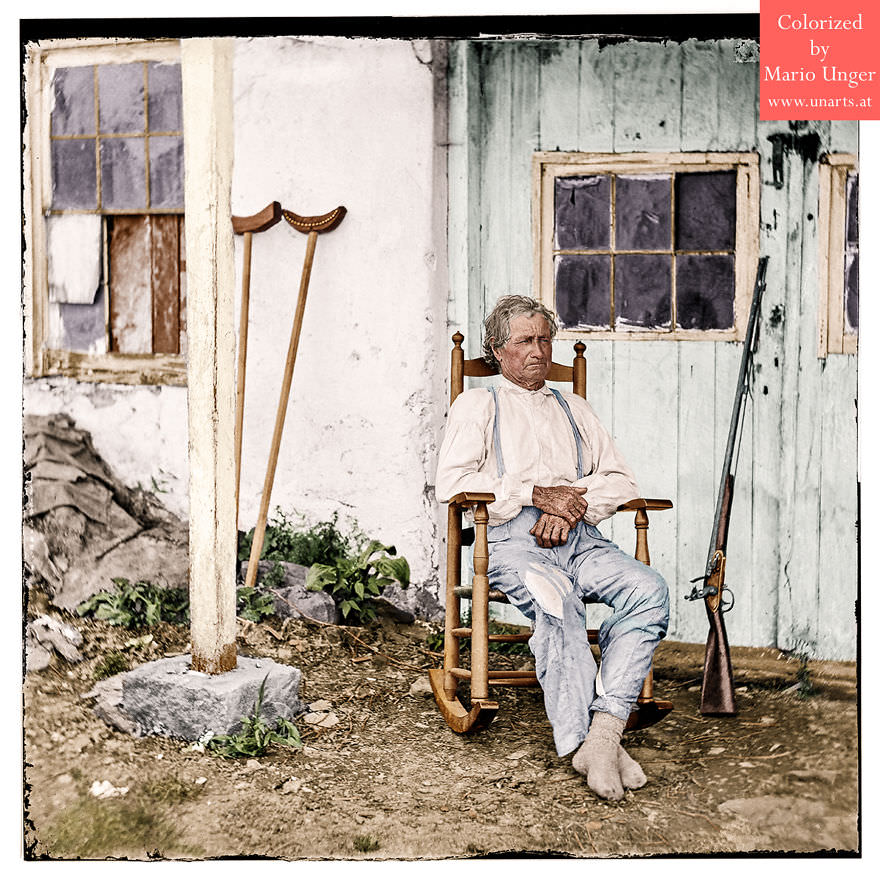
Seated in a plain wooden rocking chair outside a weathered building, John L. Burns appears in quiet repose, hands folded and gaze set with the tired steadiness of age. The colorization brings out the faded blues of his clothing, the pale wood of the porch post, and the rough, dusty ground underfoot, turning what might feel distant on the page into a more immediate human presence. Behind him, peeling boards and simple windowpanes frame a scene of everyday life rather than ceremony.
Details around the sitter draw the eye and suggest a story beyond the pose: crutches leaning nearby hint at injury or infirmity, while a long rifle rests against the wall, an unmistakable emblem of the Civil War era. The contrast between domestic calm and martial readiness is striking, as if the porch itself has become a threshold between home and battlefield. Burns’s relaxed posture doesn’t soften the atmosphere; instead it underscores how conflict could sit right alongside ordinary routines.
For readers searching for “John L. Burns 1863” or Civil War portraits, this colorized historical photo offers a textured look at clothing, objects, and architecture that monochrome often flattens. Color draws attention to worn fabric, sun-bleached timber, and the subtle shadows that model his face, inviting closer study of the man and his surroundings. It’s a compelling reminder that history was lived in places like this—on porches, in work clothes, with the marks of hardship close at hand.