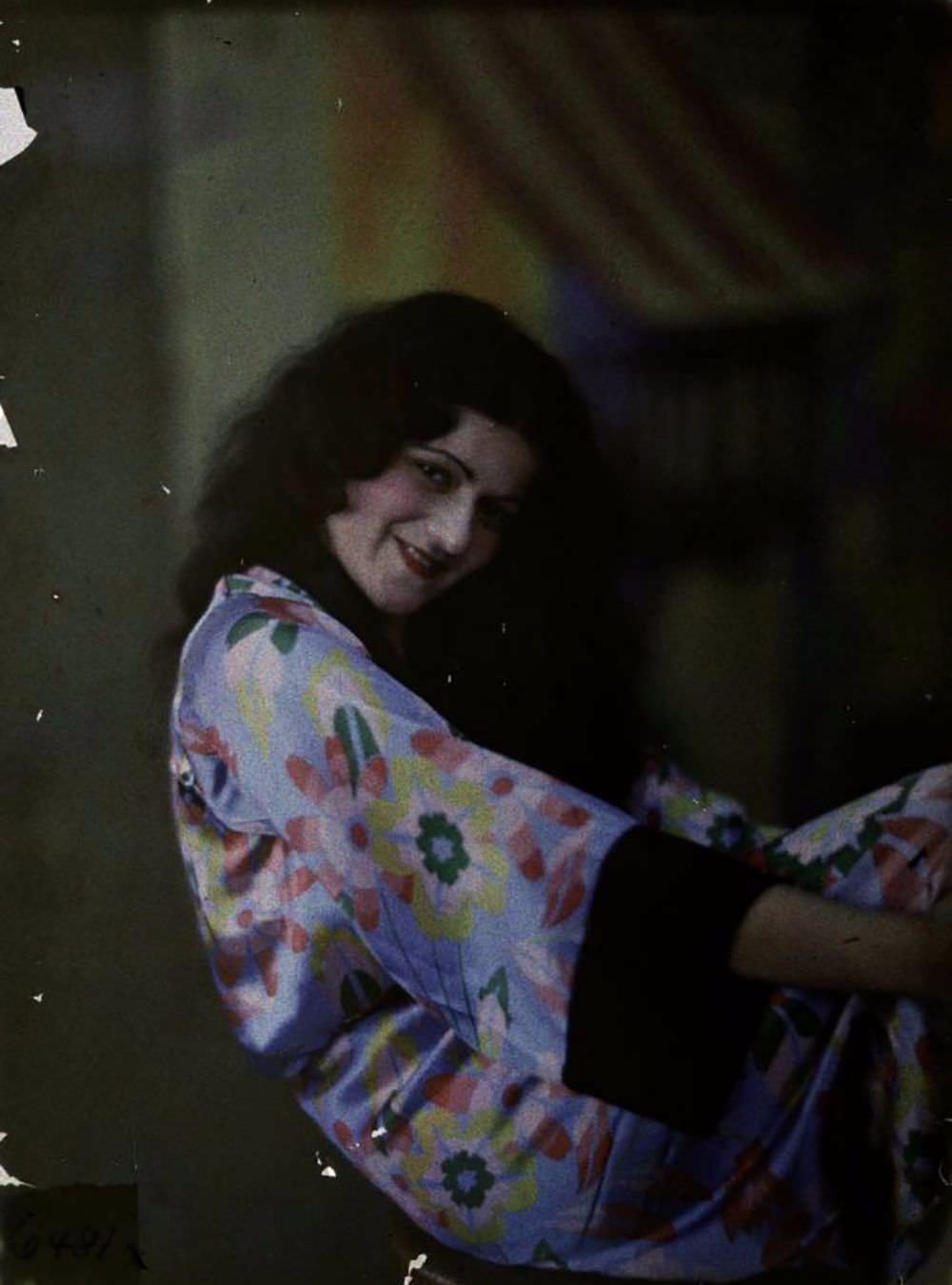
Soft color brings a 1915 moment into startling closeness: a woman turns toward the camera with a quiet, knowing smile, her dark hair falling in a loose, natural wave. The floral silk robe—lavender-toned with warm red and yellow blossoms and touches of green—catches the light in a way that suggests sheen and movement even in a still frame. Shadows pool behind her, giving the portrait an intimate, indoor feel rather than a formal studio stiffness.
What stands out is the mix of elegance and ease, a glimpse of early 20th-century style seen off-duty, where a robe could be both practical and luxurious. The wide sleeves and drape speak to the period’s fascination with flowing silhouettes and decorative textiles, while the pose feels candid—almost as if the photographer caught her mid-turn. Details like the bracelet at her wrist and the deep cuff at the sleeve edge add texture and help anchor the composition in everyday personal adornment.
As a colorization, the image invites viewers to read 1915 not as distant history but as lived experience—fabric choices, grooming, and mood rendered with renewed immediacy. It’s an excellent reference for anyone researching Edwardian-era women’s clothing, silk loungewear, or the evolving language of portraiture as cameras entered more private spaces. Seen today, the floral robe becomes more than a garment; it becomes a vivid doorway into domestic life and self-presentation a century ago.