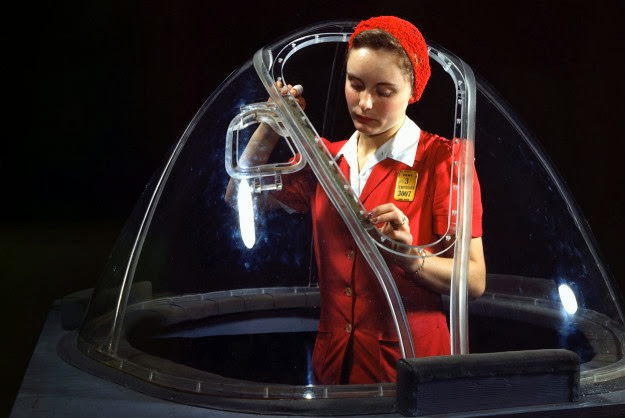
Under the bright glare of factory lights, a woman in a red uniform and headscarf concentrates on the clear plexiglass framing of a B-17F bomber’s nose section at the Douglas Aircraft Company in Long Beach, California. The colorization brings an immediate, almost modern intimacy to the scene: the curve of the glazing, the cool sheen of metal supports, and the careful posture of a skilled worker intent on precision. It’s a quiet moment of craftsmanship inside an industry defined by urgency.
Her hands are positioned where visibility and accuracy mattered most, around the distinctive “greenhouse” nose that shaped the B-17’s forward view and housed critical equipment. Details like the inspection tag pinned to her chest and the reflections dancing across the transparent panels hint at the regimented quality control of wartime aircraft production. Even without the roar of engines, the photo conveys the disciplined environment of an American defense plant at full pace.
Images like this have become touchstones for understanding women’s wartime labor beyond slogans, showing the fine, technical work required to turn raw components into combat-ready aircraft. For readers searching the history of World War II aviation, Douglas Aircraft Company, or B-17F production, the photograph offers a vivid window into how the home front was built panel by panel. The colorized treatment doesn’t change the facts, but it does sharpen the human connection—an individual worker framed inside the very structure she is helping to assemble.