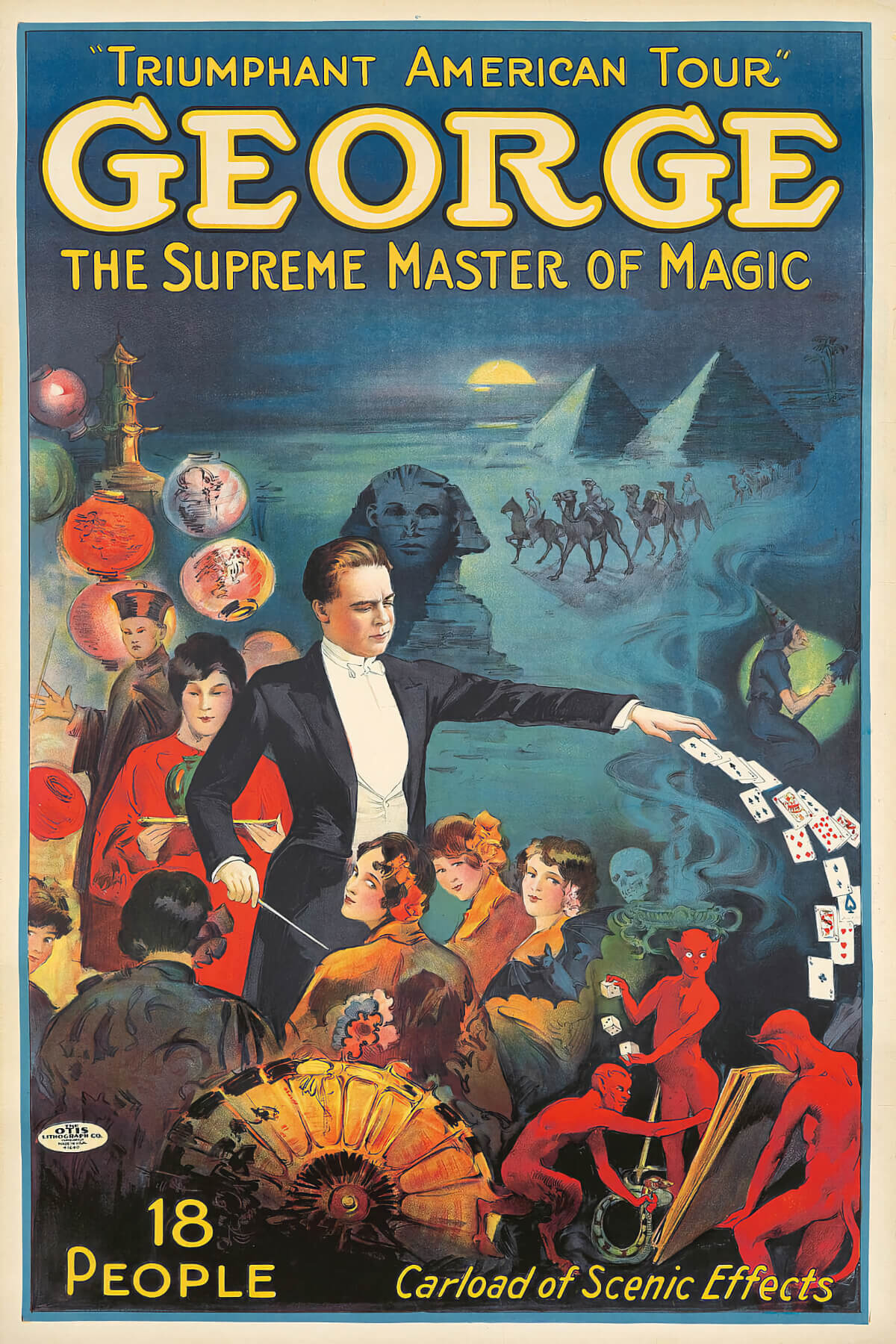
Blaring across the top in bold lettering, “Triumphant American Tour” and the name GEORGE announce a showman who wanted to be seen from the back row and beyond the theater doors. The tagline “The Supreme Master of Magic” frames this 1929 cover art as both advertisement and promise, the kind of irresistible print that once drew crowds with a mix of spectacle, mystery, and modern flair. Even before you study the illustration, the typography alone sells confidence, scale, and a night out that feels larger than everyday life.
At the center, a tuxedoed magician extends his arm in a practiced flourish, sending a ribbon of playing cards into the air while a small audience leans in, faces turned toward the action. Around him, the composition layers in theatrical motifs—fans, costumes, and stage-side figures—suggesting a full company rather than a lone conjurer. The artwork’s rich color palette and dramatic contrasts echo the late-1920s taste for glamorous entertainment ephemera, where magic posters doubled as bold pieces of graphic design.
Behind the performance, exoticized imagery unfurls like a dreamscape: pyramids under a low moon, a procession of camels, and a monumental stone head that evokes ancient wonders without naming a specific site. In the lower corner, mischievous red imps tend props and illusions, hinting at the era’s love of visual shorthand for trickery, temptation, and the supernatural. For collectors of vintage magic memorabilia, circus and vaudeville history, or Art Deco-era advertising, this “George The Supreme Master of Magic, 1929” print offers a vivid window into how touring illusionists marketed wonder—complete with “18 People” and a “Carload of Scenic Effects” to seal the promise of spectacle.