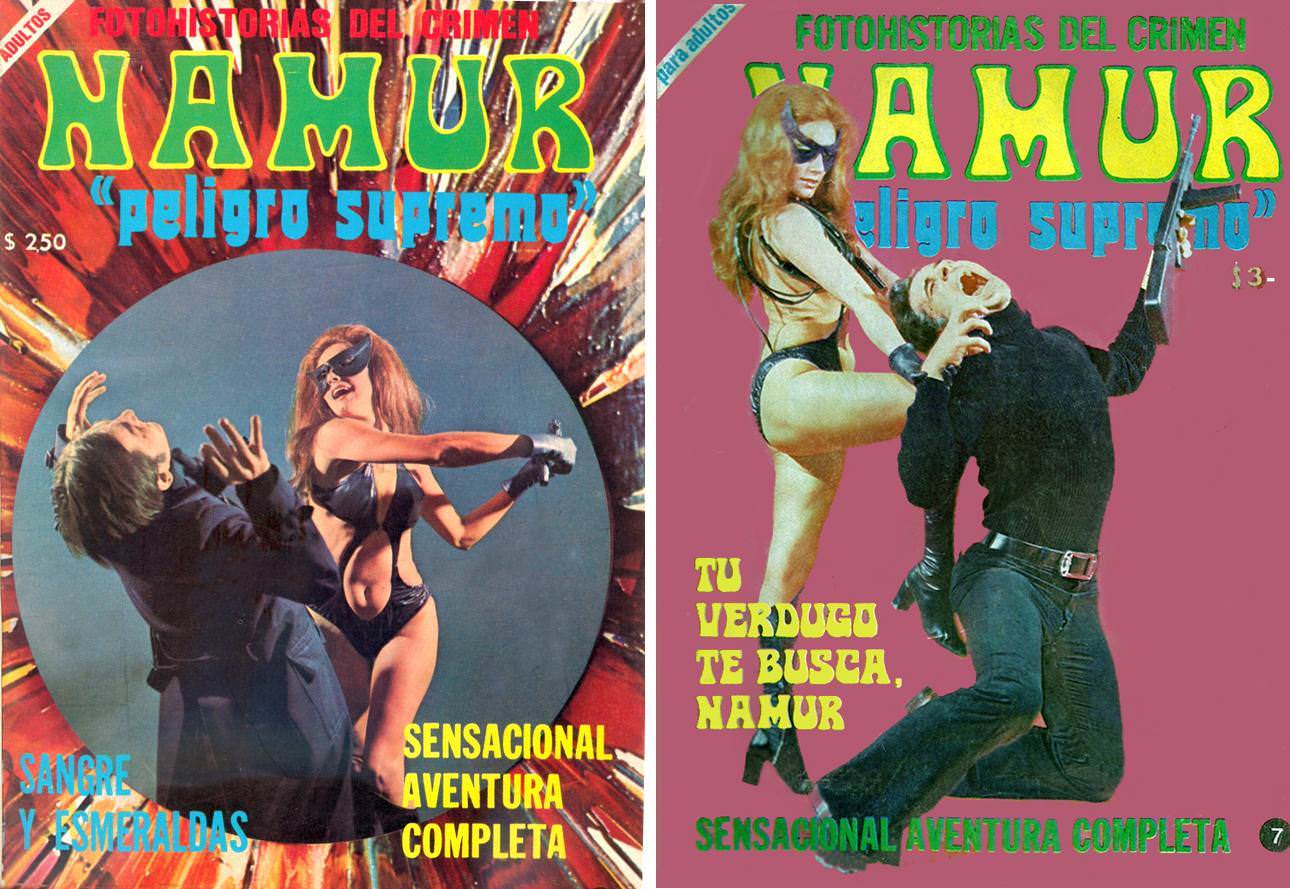
Lurid color, oversized lettering, and a breathless promise of “FOTOHISTORIAS DEL CRIMEN” pull the reader straight into the world of Spanish-language crime fotonovelas. The title “NAMUR” looms in bright green, while taglines like “peligro supremo” and “sensacional aventura completa” advertise danger and full-throttle entertainment. Even the cover prices and “para adultos” note underline how these pocket-sized publications were marketed as edgy, modern thrills for an adult audience.
At the center, staged action frames the appeal: masked glamour, a weapon raised, and a victim caught in a dramatic grip—tableaux that borrow as much from cinema posters as from comics. One cover sets the scene inside a circular spotlight against an explosive background; another strips the setting down to a flat field of color so the figures read like a headline. The Spanish phrases “SANGRE Y ESMERALDAS” and “TU VERDUGO TE BUSCA, NAMUR” lean into pulp melodrama, suggesting a mix of violence, temptation, and moral peril that defined many 1960s–70s crime photo-comics.
Seen today, this cover art offers a compact lesson in how fotonovelas blended photography, graphic design, and sensational storytelling across Spanish and Italian popular culture. Their production relied on posed actors, high-contrast costumes, and a typography-first layout that could shout from kiosks and newsstands. For collectors and visual historians alike, pieces like these preserve the era’s tastes—where crime, desire, and spectacle were packaged into serialized stories told one explosive image at a time.