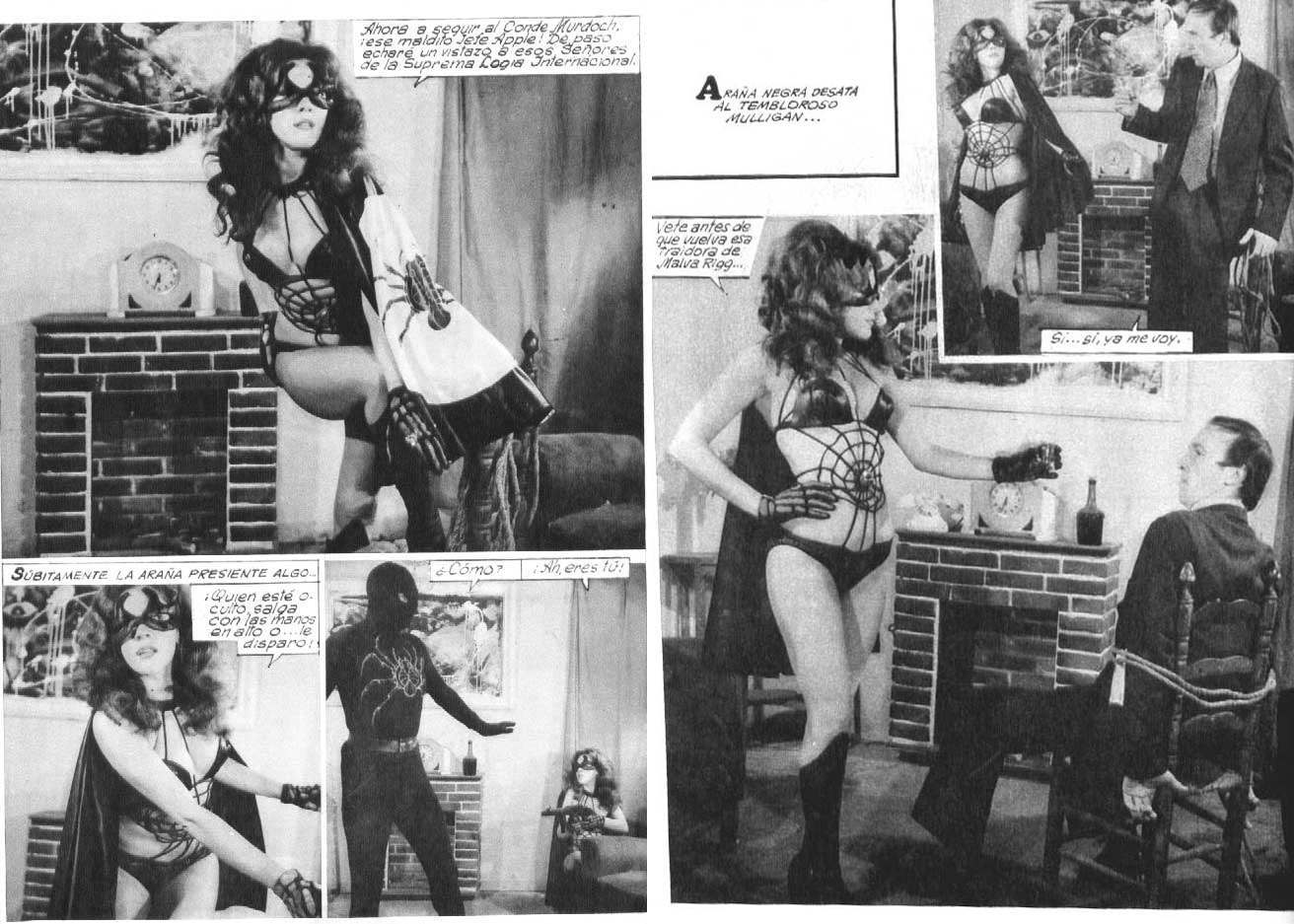
Glossy noir melodrama spills across this cover art from the era of Spanish and Italian crime fotonovelas, where stories were staged with real models and photographed like mini films. A masked woman in a web-patterned costume and cape dominates the frame, her pose theatrical and confrontational, while speech balloons in Spanish push the plot forward panel by panel. The result feels halfway between pulp comics and tabloid cinema—designed to stop a passerby cold at the kiosk.
Inside the domestic set—brick fireplace, framed wall art, and a bottle on the mantle—the tension turns intimate, even claustrophobic. One scene brings her face-to-face with a suited man, another places her standing over a seated figure, using height and costume to project power. The hard flash lighting and grainy print texture underline how these 1960s–70s photocomics traded subtlety for impact, letting gesture, wardrobe, and close quarters do the storytelling.
For readers and collectors, the appeal of these sensational photo comics lies in their hybrid language: crime tropes, superhero echoes, and soap-opera staging delivered through sequential photography. This post highlights how Spanish and Italian fotonovelas packaged suspense and seduction into fast-moving visual narratives, complete with bold captions and cliffhanger framing. It’s a vivid window into popular print culture, where pulp imagination met the camera lens and became a weekly habit.