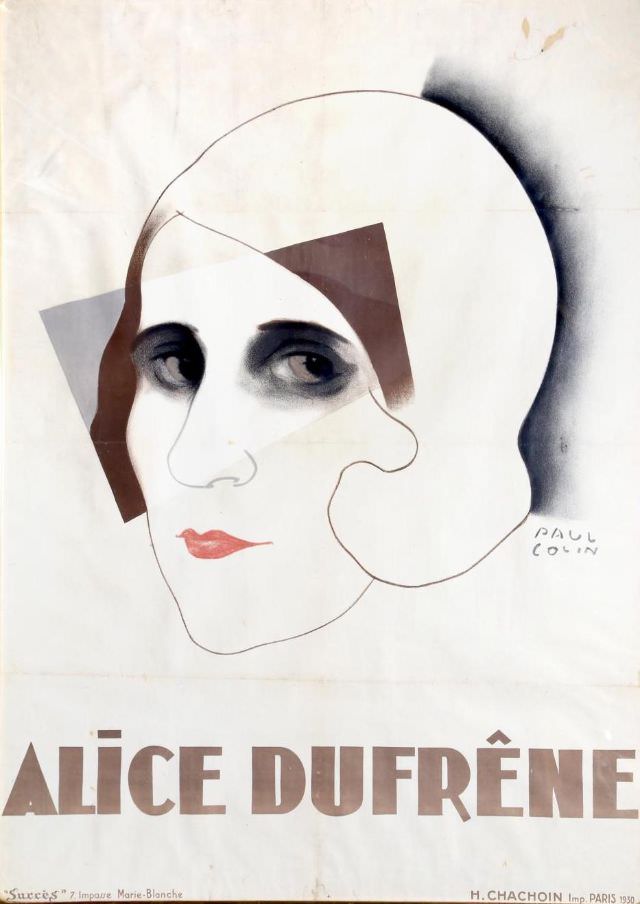
Striking geometry and theatrical elegance define this 1930 cover art for “Alice Dufrêne,” where a stylized female face is built from clean curves, sharp blocks of shadow, and a sweeping halo of pale tone. The limited palette—soft blacks and grays with a precise hit of red on the lips—draws the eye into the sitter’s sidelong gaze, suggesting both mystery and poise. Typography anchors the composition at the bottom, the bold, modern lettering turning the name into a graphic element as much as a title.
In the visual language of early 20th-century design, the piece leans into Art Deco ideals: streamlined form, dramatic contrast, and a sense of urban sophistication. The simplified features and confident negative space feel made for the world of stage and nightlife, where identity could be performed as much as lived. A small artist’s signature appears on the right side of the portrait, reinforcing its origin as illustrated cover art rather than a conventional studio photograph.
For collectors and researchers interested in 1930s graphic design, French cover art, and vintage portrait illustration, this image offers a vivid example of how celebrity, fashion, and modern printing aesthetics converged on a single sheet. It’s also a reminder that names on period covers were often meant to be read at a glance and remembered, carried by strong type and even stronger style. Whether you’re browsing for Art Deco inspiration or documenting historical ephemera, “Alice Dufrêne, 1930” stands out as a polished, era-defining design.