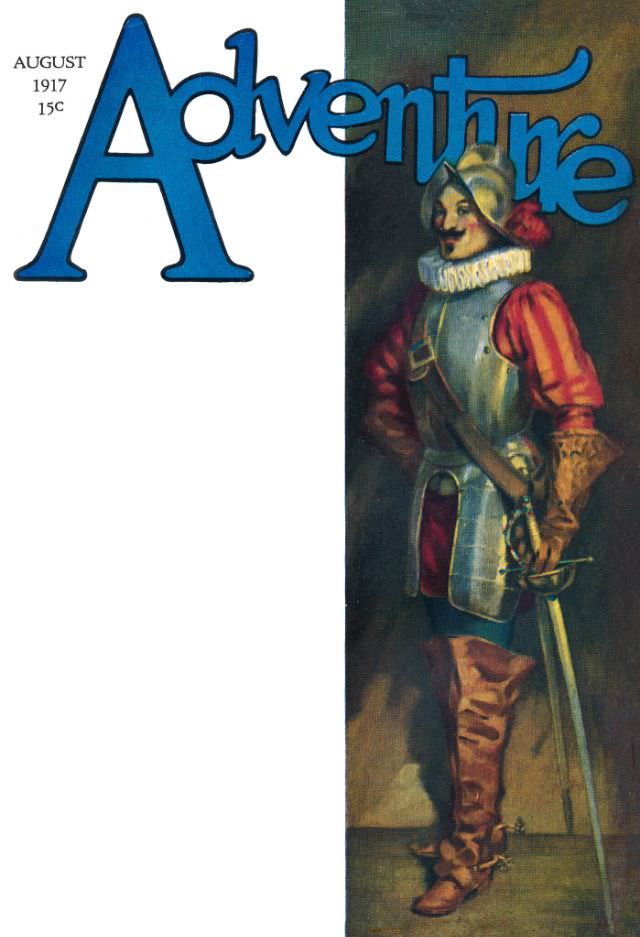
Bold lettering spells “Adventure” across the top, with “August 1917” and a 15¢ price tucked into the corner—small details that instantly place this striking piece of cover art in the world of early 20th-century popular magazines. The design leans into dramatic contrast: a clean white field on the left gives the title room to command attention, while the right side is reserved for an illustrative figure rendered in warm, painterly tones. Even before a story is opened, the layout promises action, swagger, and a dash of romance in the classic pulp tradition.
A musketeer-like swordsman stands in three-quarter pose, dressed in a plumed hat, ruffled collar, and shining breastplate, with tall boots and a long blade angled toward the floor. The artist’s emphasis on costume—satiny sleeves, metal highlights, and the glint of a hilt—signals historical adventure rather than modern reportage, inviting readers into a world of duels and courtly intrigue. The figure’s confident stance and curled moustache feel deliberately theatrical, a visual shorthand for daring heroes and cliffhanger exploits.
Collectors and design enthusiasts will appreciate how this “Adventure” magazine cover from August 1917 showcases period typography, illustration techniques, and the marketing instincts of the newsstand era. It’s also a window into what readers were buying for a few coins: escapist storytelling packaged with unmistakable flair. Whether you’re researching magazine history, pulp cover art, or early 1900s print culture, this image offers a vivid, SEO-worthy snapshot of how adventure was sold—one heroic silhouette at a time.