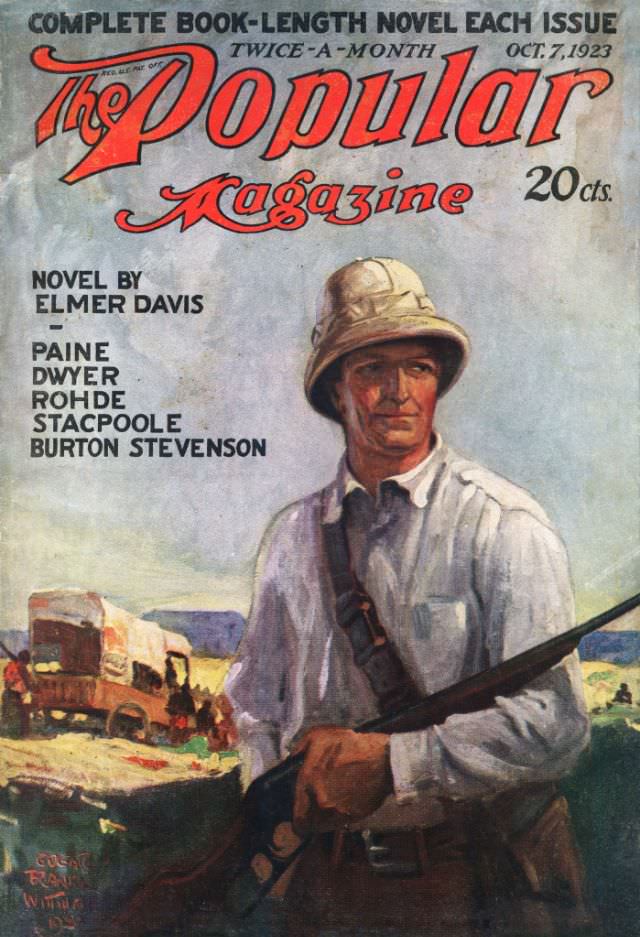
Bold red lettering sweeps across the top of this Popular magazine cover dated Oct. 7, 1923, promising “complete book-length novel each issue” and priced at 20 cents. The design leans into high-contrast typography and a clean, open sky backdrop, the kind of eye-catching newsstand presentation that defined early twentieth-century pulp and popular fiction culture. Even the small “twice-a-month” note feels like a sales pitch in miniature, reminding readers that entertainment arrived on a dependable schedule.
Front and center stands an illustrated figure in a brimmed helmet and pale shirt, his posture alert as he grips a long gun angled across the frame. A strap crosses his chest and a pouch sits at his waist, details that suggest a rugged, expeditionary life without tying the scene to a single named conflict. In the distance, a vehicle and scattered figures sit in a sunlit, dusty landscape, adding narrative tension—movement, risk, and an implied journey—within the limited real estate of a magazine cover.
On the left, the cover text highlights a “Novel by Elmer Davis,” alongside a column of other surnames, a reminder that these issues were marketed as compact libraries as much as periodicals. For collectors, designers, and readers interested in 1920s magazine cover art, this piece captures the era’s blend of adventure storytelling and commercial clarity: a dramatic protagonist, a suggestive setting, and typography engineered to stop a passerby short. It’s a vivid snapshot of how popular magazines sold suspense and aspiration in a single glance.