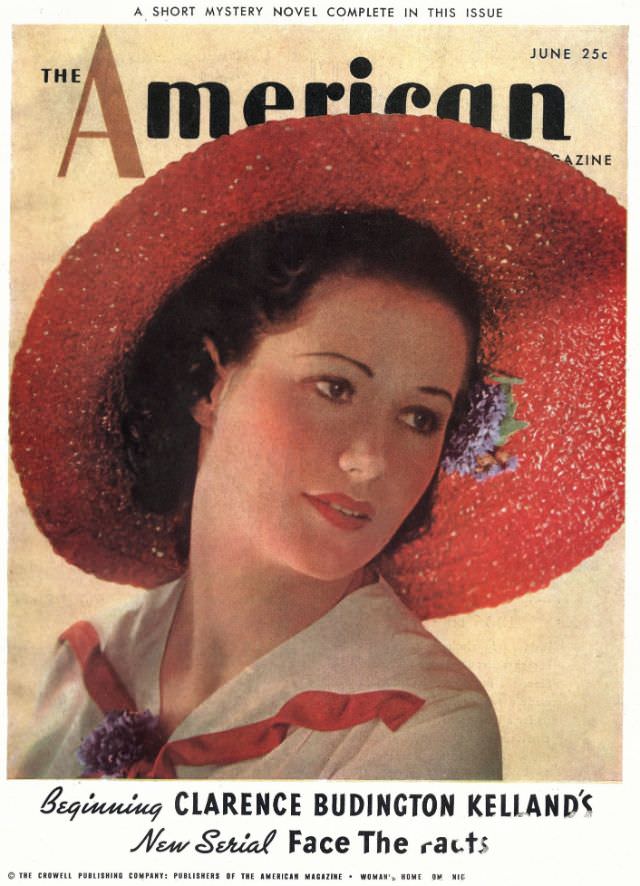
June 1936 arrives in bold color on the cover of *The American Magazine*, where a softly lit portrait dominates the page and the publication’s large masthead peeks from behind. The subject turns slightly in profile, framed by a wide-brimmed red hat that sparkles with texture and sets off her dark, waved hair and warm, rosy makeup. A crisp white blouse with red trim and a small purple floral accent completes a look that feels unmistakably of its era.
Typography and layout do plenty of storytelling here, too: “JUNE 25¢” sits at the top right, while the teaser lines promise fiction and ongoing drama for readers browsing the newsstand. The bottom banner promotes “Beginning CLARENCE BUDINGTON KELLAND’S New Serial Face The Facts,” anchoring the glamorous illustration in the practical business of selling stories month after month. Even the small-print publisher line at the very bottom hints at the wider magazine world that shaped popular taste in the interwar years.
As cover art, this piece reflects how American magazines in the 1930s balanced aspiration with accessibility—stylish, romantic imagery paired with clear signals of value and entertainment. The red hat draws the eye first, but the calm, thoughtful expression invites a longer look, as if the viewer is meant to imagine a narrative just beyond the frame. For collectors and historians of print culture, the June 1936 cover offers a vivid snapshot of period fashion, graphic design, and the consumer appeal of illustrated magazine covers.