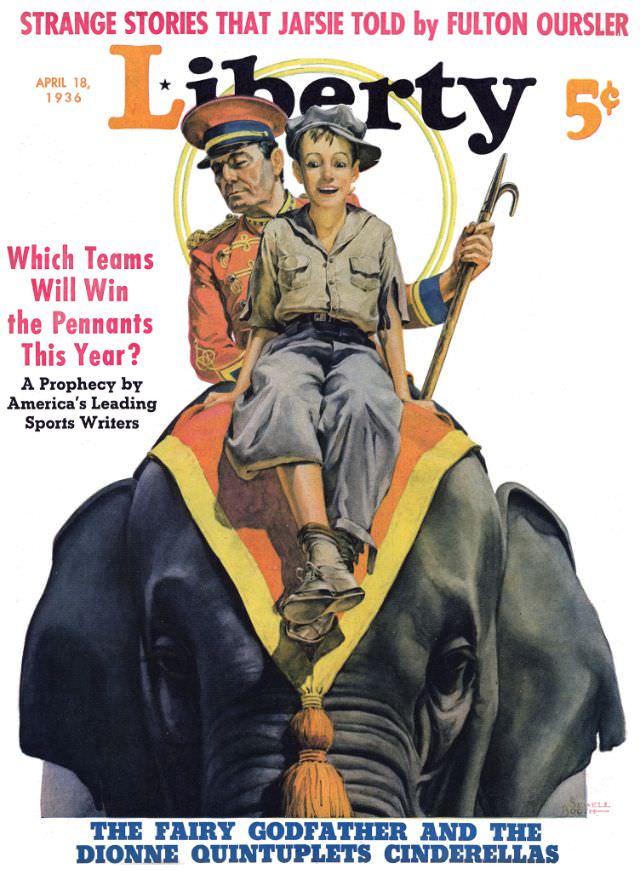
Bold color and theatrical composition define the Liberty cover dated April 18, 1936, where a smiling young woman sits high atop an elephant draped in decorative cloth and tassels. Behind her, a stern figure in an ornate uniform leans in close, while a long rifle rises at the right edge of the scene, adding a note of tension to an otherwise playful pose. The oversized masthead and clean white background make the illustration pop, a classic newsstand strategy for grabbing attention in an era when covers had to sell the story at a glance.
Text on the cover points to the magazine’s wide-ranging appetites: sensational storytelling (“Strange Stories… by Fulton Oursler”) alongside sports-page prophecy asking which teams will win pennants that year. That mix of spectacle and everyday obsession—adventure, celebrity, and baseball chatter—captures how mass-market magazines balanced escapism with familiar conversation starters. Even the five-cent price printed near the title signals the accessibility Liberty aimed for, positioning itself as weekly entertainment for a broad readership.
Seen today, this piece of cover art works as both illustration and cultural artifact, revealing 1930s visual humor, gendered performance, and the magazine industry’s flair for staging drama. The elephant’s scale, the parade-like costume, and the uneasy presence of military finery create a miniature story that invites viewers to invent what happened before and after the moment depicted. For collectors of Liberty magazine covers, vintage illustration enthusiasts, or anyone researching American popular culture, this April 18, 1936 issue offers a vivid window into how printed art once competed for eyes on a crowded stand.