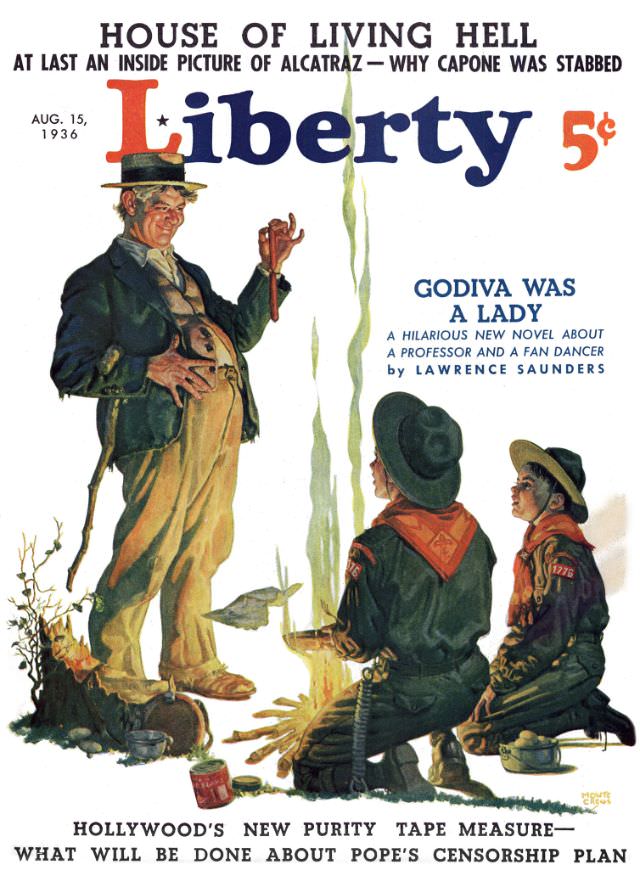
Bold headlines crowd the top of the Liberty cover dated August 15, 1936, promising readers a tour of “Alcatraz” and a sensational explanation of “why Capone was stabbed,” while the familiar Liberty masthead anchors the page with a bright 5¢ price tag. Off to the side, the cover also teases “Godiva Was a Lady,” credited to Lawrence Saunders, signaling the magazine’s blend of hard-edged true-crime curiosity and lighter serial fiction. Even before a page is turned, the typography and teasers sell the urgency of 1930s newsstand culture.
At the center, the artwork shifts into a quieter, more intimate American scene: a campfire meeting rendered with painterly warmth. A standing figure in work clothes and hat gestures as if telling a story, while two uniformed youths—suggestive of scouts—kneel by the fire, their attention fixed on the speaker. Cooking pots, a tin can, and rough ground details add everyday texture, turning the cover into a snapshot of outdoor ritual and generational instruction.
Together, these elements make the Liberty cover a compact time capsule of the mid-Depression era, when national anxieties, crime lore, and moral debate shared space with idealized notions of youth, order, and the open air. The line about “Hollywood’s new purity tape measure” hints at the period’s censorship battles and changing standards, a reminder that popular magazines were forums for cultural argument as much as entertainment. For collectors and history readers alike, this 1936 Liberty magazine cover art offers a vivid entry point into the era’s fears, fantasies, and everyday aspirations.