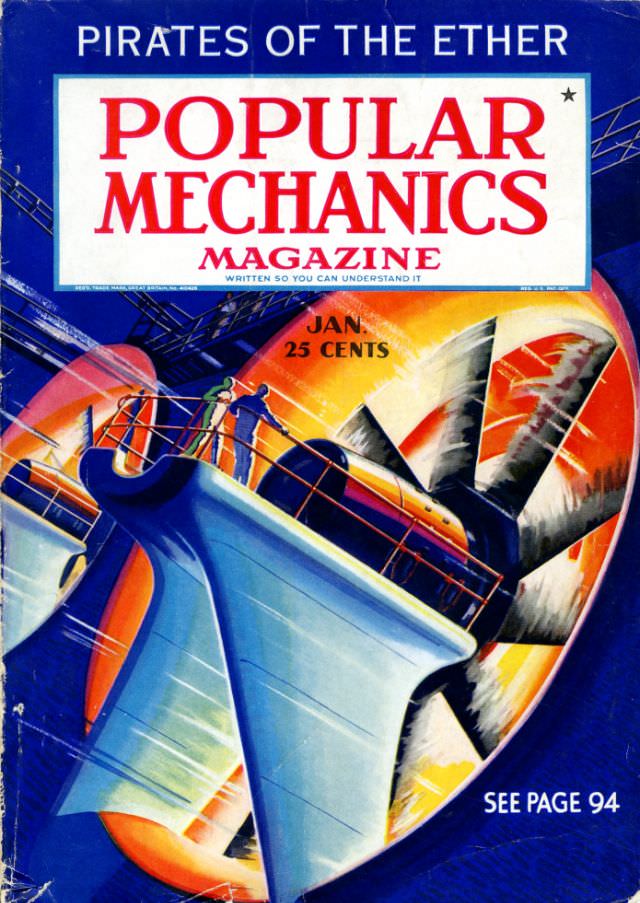
Bold typography crowns the January 1936 cover of Popular Mechanics magazine, framed by the teaser “Pirates of the Ether” and the familiar promise that it is “written so you can understand it.” The price—25 cents—sits like a small time capsule beside the month, instantly placing the issue in an era when practical science and modern invention were sold as everyday reading. Even before the artwork takes hold, the design broadcasts confidence: technology is exciting, explainable, and meant for the curious.
Below the masthead, the cover art leans hard into motion and drama, with a sleek, stylized vessel thrusting forward through streaked light and deep blue shadows. A figure stands on deck near railings and rigging, while a bright circular glow behind the scene suggests powerful illumination or an energized sky, heightening the sense of speed and danger. The palette of blues, reds, and warm yellows gives the illustration a pulpy, forward-looking intensity that fits the magazine’s fascination with radio, mechanics, and the modern world.
As a piece of Popular Mechanics history, this cover reflects how the 1930s packaged technical subjects as adventure—part consumer guide, part speculative thrill. The headline about “ether” hints at radio-era anxieties and intrigue, when invisible signals could feel as mysterious as any frontier and “piracy” could happen through the airwaves. For collectors and researchers searching for a Popular Mechanics January 1936 magazine cover, this issue offers a vivid glimpse into how popular science was marketed: dramatic, accessible, and irresistibly optimistic about the power of engineering.