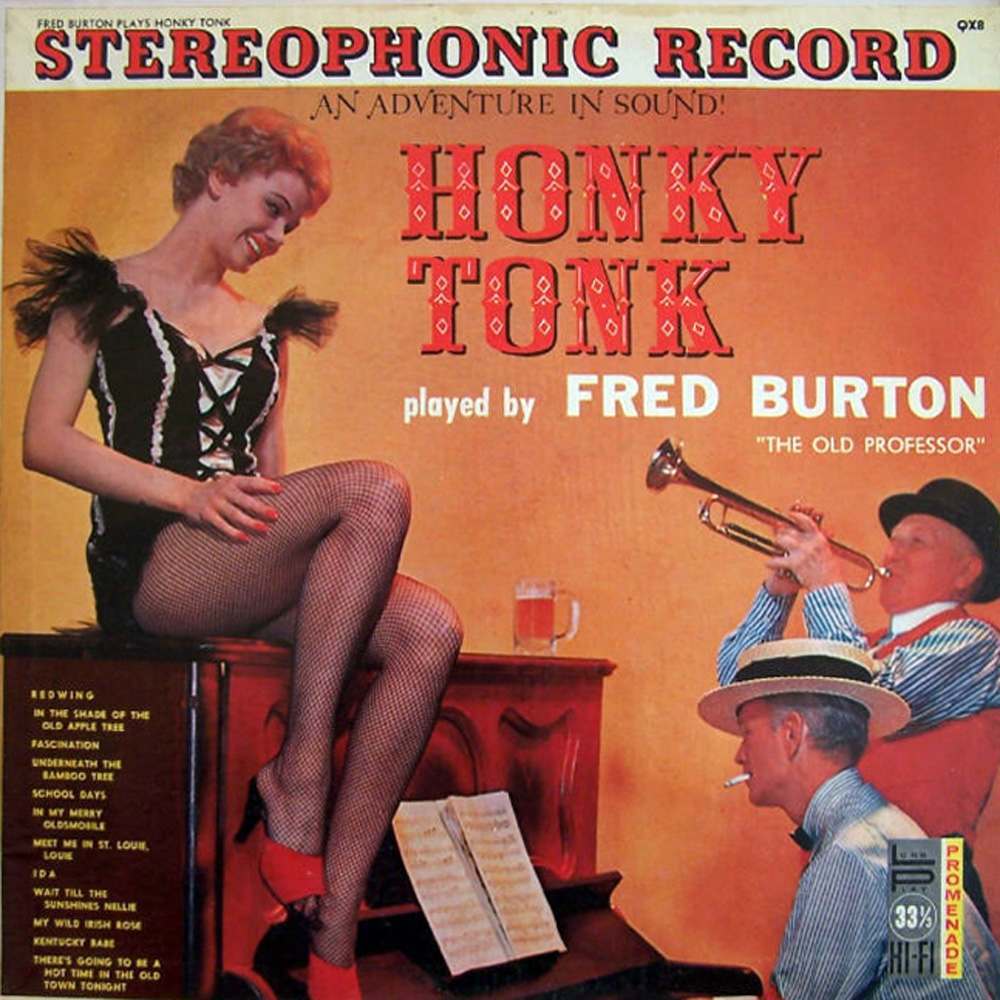
Bold lettering shouts “STEREOPHONIC RECORD” and “HONKY TONK,” setting a loud, playful tone before the eye even lands on the scene: a smiling pin-up perched atop an upright piano, fishnet stockings and stage-ready confidence turned into pure advertising. The warm, poster-like color palette and theatrical pose sell not just music, but an after-hours mood—part burlesque wink, part barroom bravado—made for browsers flipping through record bins in search of a good time.
Across the cover, the tagline “AN ADVENTURE IN SOUND!” frames honky-tonk as modern spectacle, while the credited performer, Fred Burton, anchors the fantasy in a named act. A trumpet player and a seated musician in a straw boater hat complete the tableau, along with a frothy beer on the piano—small props that conjure a smoky lounge where tunes bounce off polished wood and laughter rises between choruses. Even the piano’s sheet music becomes a visual cue: this is “party tunes” packaged as a scene you can almost hear.
Honky-tonk record cover art often walked a fine line between musical identity and marketing mischief, and this example leans happily into both. The composition uses pin-up glamour, instruments, and nightlife symbolism to promise spirited listening at home, especially in an era when “stereophonic” itself sounded like a thrill. For collectors, designers, and fans of mid-century ephemera, covers like this are time capsules—part genre history, part pop culture theater, and unmistakably built to catch the eye.