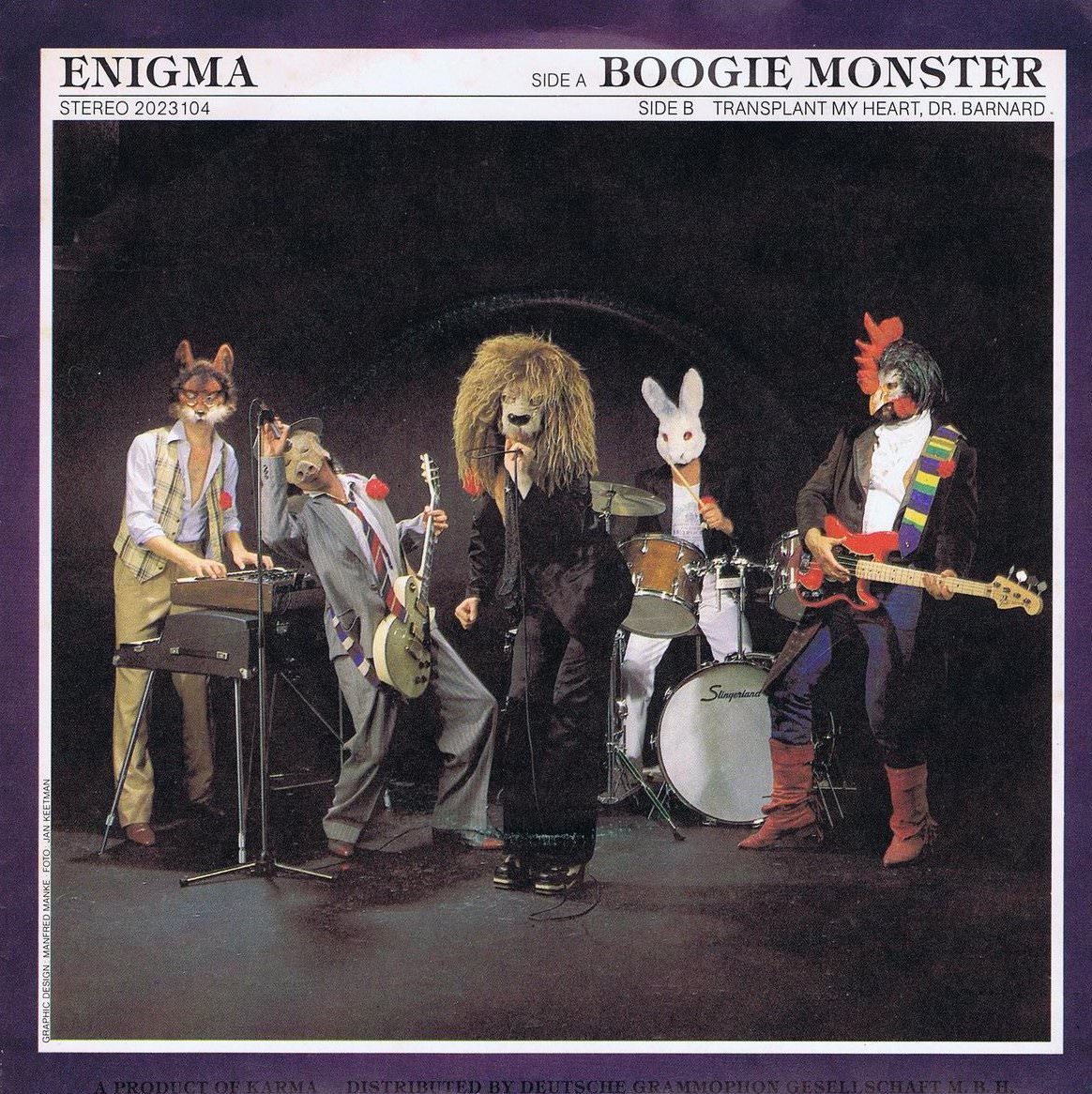
Animal masks and rock ’n’ roll share the frame in a gleefully strange sleeve for “ENIGMA” and the track “Boogie Monster,” where a costumed band performs under stage lighting as if it’s a midnight cabaret. A fox-faced keyboardist, a pig-masked guitarist, a rabbit-headed drummer, and a rooster-faced bassist surround a singer in a shaggy mane, turning the simple act of posing with instruments into theater. The stark black background makes the figures pop, while the clean, label-like typography across the top mimics a record’s side A/side B formatting and sells the illusion of a live, loud spectacle.
Such unconventional album cover designs from the 1960s and 1970s often treated packaging as an extension of performance, inviting buyers to decode the joke before the needle even hit the vinyl. Here, the surreal costumes suggest alter egos, satire, and the era’s taste for concept-driven imagery—part glam, part art-school provocation, part novelty act with a wink. Even small details, like the drum brand visible at center and the bold title strip, ground the absurdity in the real material culture of bands, studios, and printed sleeves.
For collectors and design lovers, cover art like this is a reminder that the record jacket was once a miniature stage where typography, photography, and persona collided. It’s memorable not because it explains itself, but because it refuses to—dangling the promise of something bizarre and danceable behind the words “Boogie Monster.” In a gallery of unusual and unconventional album cover designs, this one stands out as pure visual hook: a single, strange scene built to stop you at the bin and make you listen.