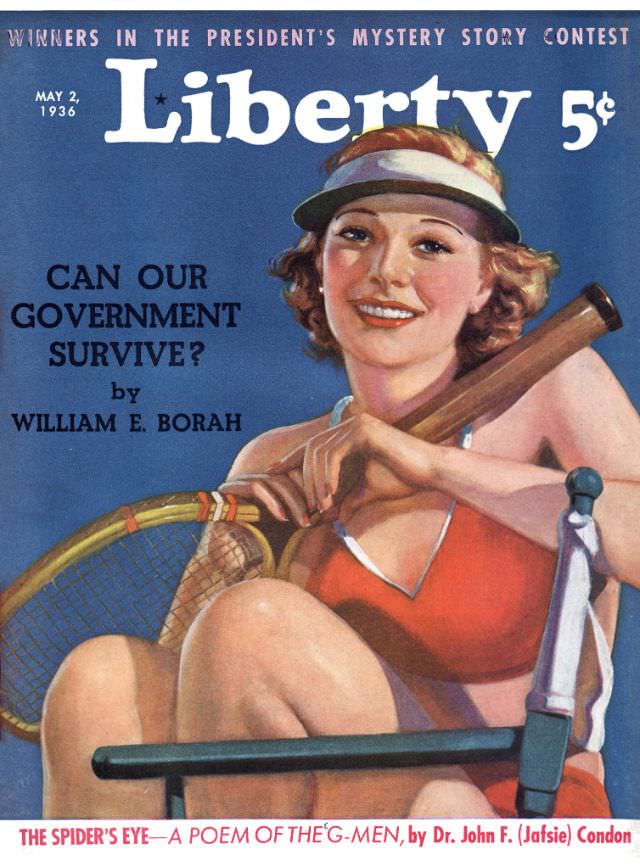
Bold lettering and bright illustration pull the eye straight to the Liberty cover dated May 2, 1936, where a smiling athlete in a red suit poses with a tennis racket and a wooden bat slung over her shoulder. The clean blue background, crisp highlights, and confident posture give the artwork an upbeat, modern tempo—exactly the kind of newsstand appeal that made magazine cover art a form of popular spectacle in its own right. Even the five-cent price and contest banner across the top speak to mass readership and the competitive energy of print culture in the 1930s.
Across the left side, the cover’s big question—“Can Our Government Survive?”—sits beside the byline for William E. Borah, setting a striking contrast between leisure imagery and serious civic debate. That tension is part of the design’s power: sport and sunshine for the eye, political uncertainty for the mind, all packaged for quick browsing at the counter. Liberty’s typography and layout balance urgency with polish, showing how mainstream magazines blended entertainment, opinion, and national conversation on a single page.
Along the bottom, a teaser for “The Spider’s Eye—A Poem of the G-Men” adds another layer of period flavor, hinting at crime-fighting fascination and the era’s taste for dramatic narratives. For collectors and researchers, this Liberty magazine cover is a vivid snapshot of 1936 visual culture—where advertising savvy, editorial ambition, and illustrated glamour met in one iconic front page. Use it as a window into Depression-era anxieties and aspirations, captured not in a photograph, but in expertly crafted cover art.