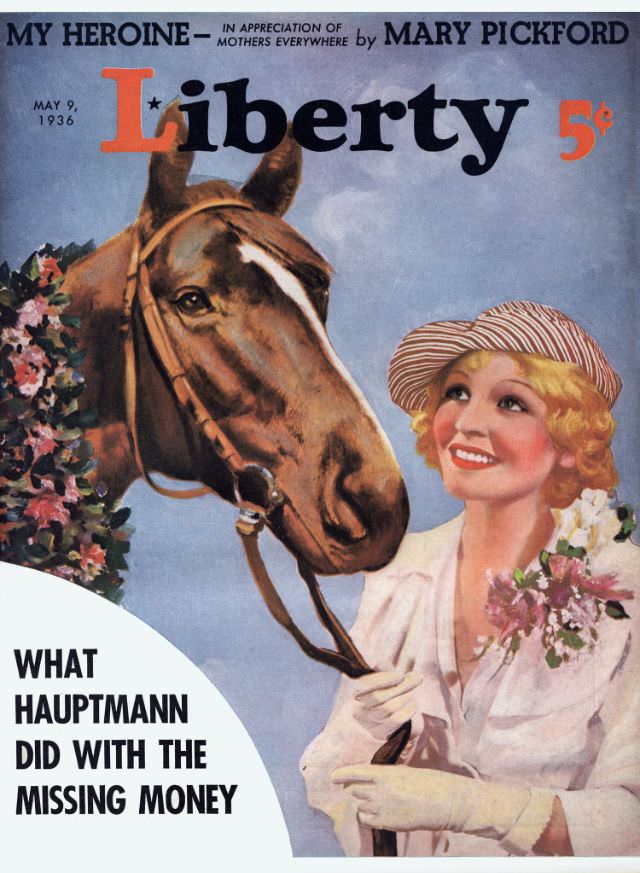
May 9, 1936 arrives in bright, confident color on the cover of *Liberty*, priced at 5¢ and designed to stop a passerby mid-step at the newsstand. A chestnut horse fills the left side of the composition, its bridle and alert ears rendered with affectionate realism, while a smiling woman in a striped cap and white gloves turns toward it. Framed by lush blossoms, the pairing leans into a gentle, almost cinematic warmth that contrasts with the magazine’s bold, blocky masthead.
Across the top, the cover teases feature content with prominent typography, including a line of appreciation credited to Mary Pickford and the large headline about “Hauptmann” and “the missing money.” That mix of glamour, sentiment, and hard-edged crime coverage is quintessential 1930s magazine culture—selling readers both escapism and immediacy in the same breath. The soft blue background and carefully staged eye contact between woman and horse provide a calm visual pause amid attention-grabbing text.
For collectors and researchers of vintage magazine covers, advertising history, and Depression-era American popular media, this *Liberty* cover is a rich artifact of period illustration and newsstand marketing. It reflects how mainstream weeklies balanced human-interest storytelling with sensational headlines, using color artwork to create an emotional hook before a single article was opened. As cover art, it’s also a charming snapshot of 1930s style—garden florals, polished accessories, and the enduring appeal of horses in American visual culture.