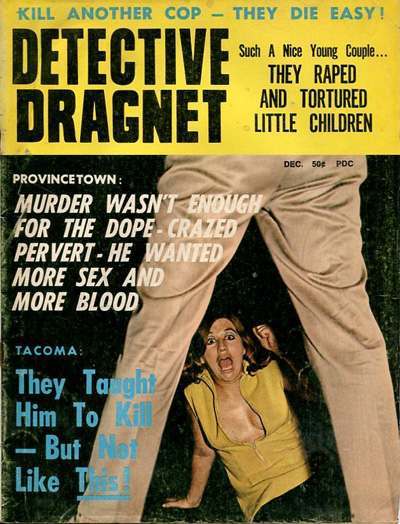
Sensational pulp cover design dominates the frame here, with bold, blocky lettering and lurid promises of crime, vice, and violence competing for attention. The title “Detective Dragnet” looms overhead while smaller lines stack up like shouted headlines, a classic strategy in mid‑century magazine art meant to stop a passerby cold. Even without a full narrative, the typography, color, and breathless copy reveal how cover art once sold mood first and details second.
At the center of the composition is the pose that gives your post its hook: a dramatic A‑frame created by a man’s planted legs, forming a triangular stage for the scene beneath. Between them, a woman in a vivid yellow dress recoils with hands braced on the ground, her face turned upward in alarm, turning the body geometry into instant peril and spectacle. That simple arrangement—two strong diagonals meeting above a focal point—directs the eye like an arrow and has echoed for decades in fashion editorials, gallery posters, and movie one‑sheets that borrow the same visual tension.
From a design-history perspective, the A‑frame functions as both structure and symbolism, a human-made arch that frames vulnerability while projecting dominance, authority, or threat depending on context. It’s an efficient poster trick: create depth, isolate the subject, and deliver a story beat in a single glance—perfect for modern campaigns that still rely on split-second readability. For readers tracing the influence of iconic poses across modern fashion, art, and movie posters, this kind of cover art offers a clear ancestor to today’s graphic storytelling, where bodies become typography and composition becomes plot.