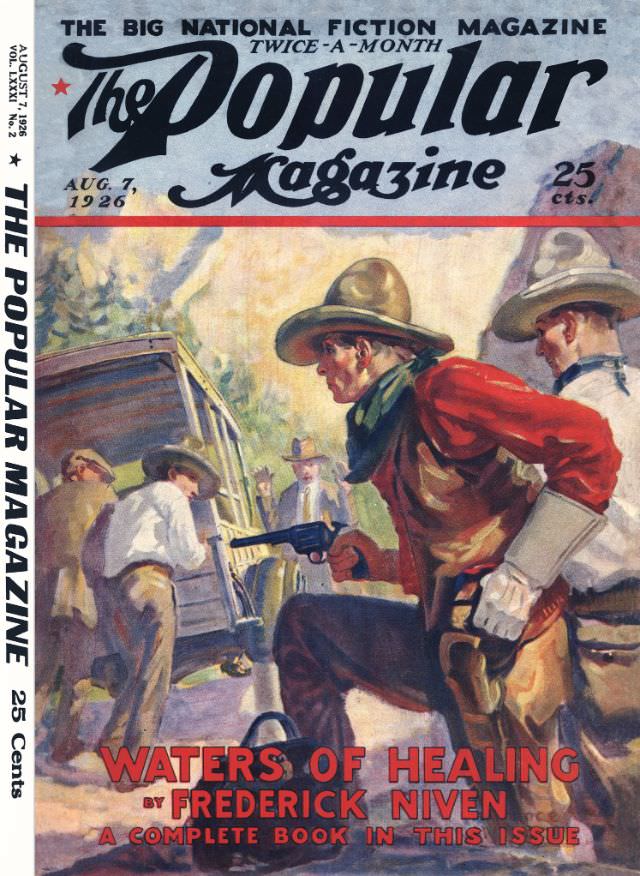
Bold lettering across the top announces **The Popular Magazine**, a “big national fiction magazine” issued twice a month, and the August 7, 1926 cover makes sure you notice the price—25 cents—before your eye drops into the action below. A tense painted scene unfolds in the foreground: a man in a brimmed hat and red jacket crouches with a pistol in hand, while figures behind him watch and move with caution. Even without turning a page, the design sells urgency and adventure, the kind of pulp storytelling that helped define popular reading in the 1920s.
Along the left edge, the vertical masthead and issue details frame the illustration like a poster, giving the cover strong shelf appeal. The art leans on motion and contrast—bright clothing, dusty ground tones, and a hazy background—suggesting an outdoor confrontation near a large vehicle or structure, possibly a railcar or truck. These compositional choices were practical as well as dramatic: at a glance, a potential buyer could read genre, stakes, and mood from the newsstand.
Front and center at the bottom, the featured story title “Waters of Healing” by Frederick Niven promises “a complete book in this issue,” a reminder that magazines often delivered novel-length entertainment at a modest cost. For collectors and readers of vintage pulp fiction, this cover is a vivid artifact of early 20th-century magazine cover art, where illustration, typography, and marketing copy worked together to create instant intrigue. Whether you’re researching 1926 periodicals, classic fiction magazines, or the history of American popular publishing, this issue stands out as a snapshot of the era’s tastes and visual storytelling.